How to Start Exploring Korean Food: A Practical Beginner’s Guide
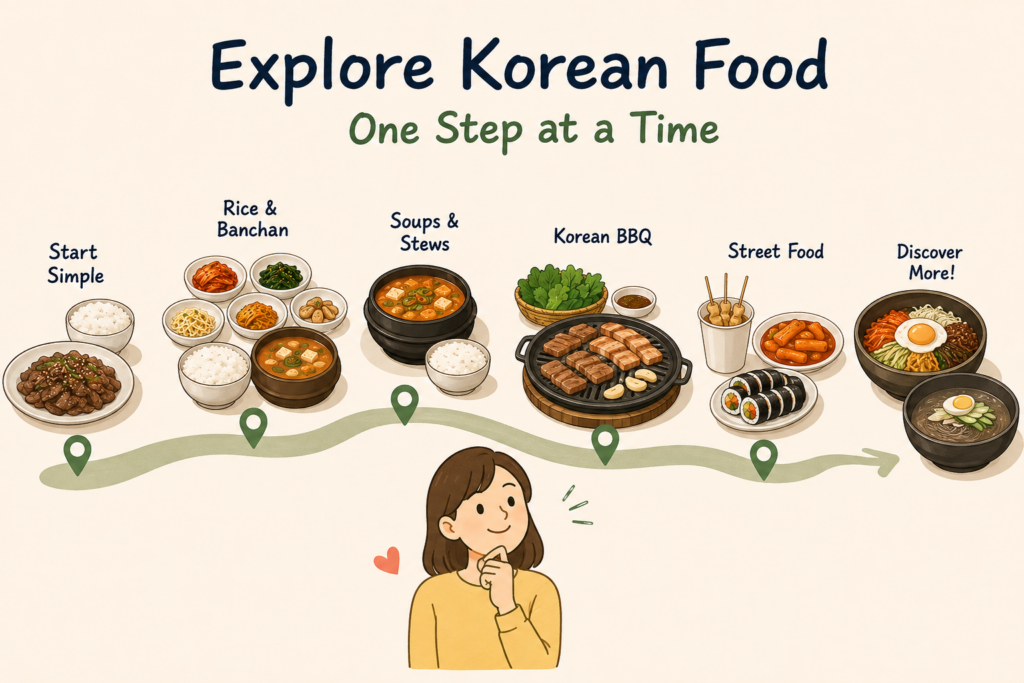
Explore Korean food for beginners by building on flavors you enjoy, from rice and banchan to BBQ, street food, and everyday home meals.
When You Are Wondering What to Try Next
If you enjoyed bulgogi, what could you try next? If bibimbap appealed to you but kimchi felt unfamiliar, where could your exploration of Korean food go from there?
When introducing Korean food, I think it helps to begin with flavors that feel relatively familiar. But everyone does not have to start with bulgogi and move on to bibimbap.
Preferences differ. I like rice tteok, while my wife prefers wheat tteok. She enjoys spring greens, but they are still not particular favorites of mine. Even after years of eating Korean food, we have different tastes.
There is no need to make liking every Korean dish your goal. Notice what you enjoyed about a meal, then choose something new that connects with it.
If you are still choosing your very first dish, see our guide to what Korean food a complete beginner should try first. Here, we will look at how to build on that first experience.
Pick One Thing You Enjoyed About the Dish
Remembering what you liked, alongside the name of the dish, makes the next choice easier.
If you enjoyed bulgogi, was it the sweet-savory seasoning or the texture of the thinly sliced meat? With bibimbap, did you like the combination of rice and vegetables, or was the gochujang seasoning what stood out?
You do not need to analyze every detail. “I liked the broth,” “It was comfortably mild,” or “I enjoyed the chewy texture” is enough.
For your next meal, keep one of those features and explore a difference.
| What you enjoyed | A possible next choice | What to compare |
|---|---|---|
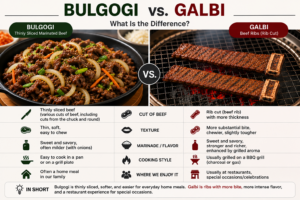
| Bulgogi’s sweet-savory meat seasoning | Marinated galbi | The thickness and texture of the meat |
| Bibimbap’s rice and vegetables | A meal with rice and several banchan | Mixing everything in one bowl versus tasting separate combinations |
| Tteokbokki sauce | Rabokki | The texture of noodles added to a similar sauce |
| Kongguksu’s nutty, cold broth | Jat-guksu | The different aromas of soybeans and pine nuts |
This is not a required sequence. It is an example of using your response to one meal to help choose another.
After a One-Bowl Meal, Try Rice With Separate Banchan
Bibimbap brings several ingredients together in one mixed bowl. When rice and banchan arrive separately, you can experience different combinations with each bite.
You might have rice with seasoned vegetables, then kimchi, followed by a spoonful of soup or stew. Compare the flavor of a mixed bowl with choosing among foods that remain separate on the table.
You do not need to know every banchan name at first. Notice which ones work well with rice and which flavors seem strong. Our article on why Korean meals have several side dishes explains how the small plates come together as a meal.
At home, we also combine prepared banchan with the soup or main dish we cook that day. Stir-fried nuts and stir-fried anchovies are regular fixtures on our table these days. Ordinary foods like these can broaden your experience of Korean cooking too.
Change the Setting as Well as the Food
Choosing a new dish is only one way to explore. After a one-bowl meal, you might try sharing grilled meat with other people or ordering a few foods together at a bunsik shop.
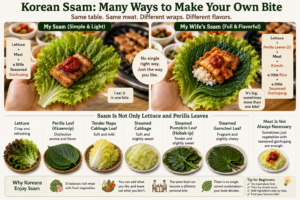
At a Korean BBQ restaurant, the meal unfolds while people wait for meat to cook on a shared grill and enjoy it with banchan or leafy wraps. Our article on what makes Korean BBQ different looks at how that differs from receiving a finished plate.
At a bunsik shop, you can explore combinations such as tteokbokki and fried snacks. I like fried squid and gimmari, fried seaweed rolls, dipped in tteokbokki sauce. The same fried snack tastes different on its own and with sauce. Our guide to Korean street food introduces the individual dishes.
If you are eating alone, choose a comfortable arrangement, such as gimbap, noodles, or a meal of rice and soup. Eating with others can add to the experience, but you do not need a companion to get to know Korean food.
Work Out What Felt Unfamiliar
If you did not enjoy a dish, consider whether it was the heat, aroma, or texture that made it difficult. The answer can guide a different choice.
If sour kimchi felt unfamiliar, you could try a less fermented version. If the texture of tteokbokki did not appeal to you, you could look for a version made with a different kind of tteok. These are options when you feel curious enough to try again.
My wife and I prefer kimchi at different stages. I like it less fermented, while she likes it further along, with more sourness. One serving does not represent every kind of kimchi, but there is no need to force yourself to enjoy it.
Fermented ingredients can also feel different within a finished dish. Smelling doenjang on its own and eating doenjang jjigae are different experiences. We discuss this in our article on Korean fermented foods.
Increasing your tolerance for spicy food is not the goal. You can continue choosing mild dishes and still experience a wide range of Korean flavors.
Check the Details a Photo Cannot Show
A photo shows what a dish looks like, but it cannot fully explain its seasoning, texture, or serving size.
When choosing something unfamiliar, check the main ingredients, cooking method, spice level, and whether the portion is intended for one person or for sharing. Whether sauce can be served separately or the heat adjusted depends on the restaurant.
Instead of memorizing every dish name, learn recurring words from foods you have eaten. Terms such as bokkeum, for stir-fried dishes, or gui, for grilled dishes, can help you connect a new menu item with something familiar. Our guide to reading a Korean restaurant menu explains this in more detail.
After trying something new, remember its name and one thing you enjoyed. That gives you a useful reference for choosing something similar or comparing a difference next time.
Expand Into Seasonal Foods and Everyday Home Meals
Once a few dishes feel familiar, the season can suggest another choice. Cold noodles in summer or spring greens on a menu can offer a starting point. Our article on Korean seasonal food explores the connection between the time of year and the table.
In our home, enjoying kongguksu for summer lunches led us to try making the broth with pine nuts instead of soybeans. Changing one main ingredient gave a familiar meal a different aroma. We shared the process and photos in our homemade jat-guksu story.
You do not always need to add an unusual dish. Everyday meals such as rice with banchan or a bowl of noodles can teach you something too. Our article on what we actually eat at home shows breakfasts, lunches, and dinners beyond the best-known restaurant dishes.
You can keep exploring through nearby restaurants or ingredients available for home cooking even without a trip to Korea. Just remember that one version you encounter does not represent every Korean household or restaurant.
Let a Meal You Enjoyed Guide the Next One
There is no final level to reach when learning about Korean food. You do not have to progress from mild food to spicy food, or come to love kimchi and every kind of seasoned vegetable.
Once you find a dish you enjoy, try a different ingredient with similar seasoning, or the same ingredient prepared another way. If one-bowl meals feel familiar, explore rice with banchan. If you know restaurant dishes, take a look at what people cook at home.
We still have different preferences and try new combinations within the foods we know. As a beginner, you can do the same: use a meal you enjoyed as the starting point for your next choice.