How Does Korean Food Change With the Seasons?
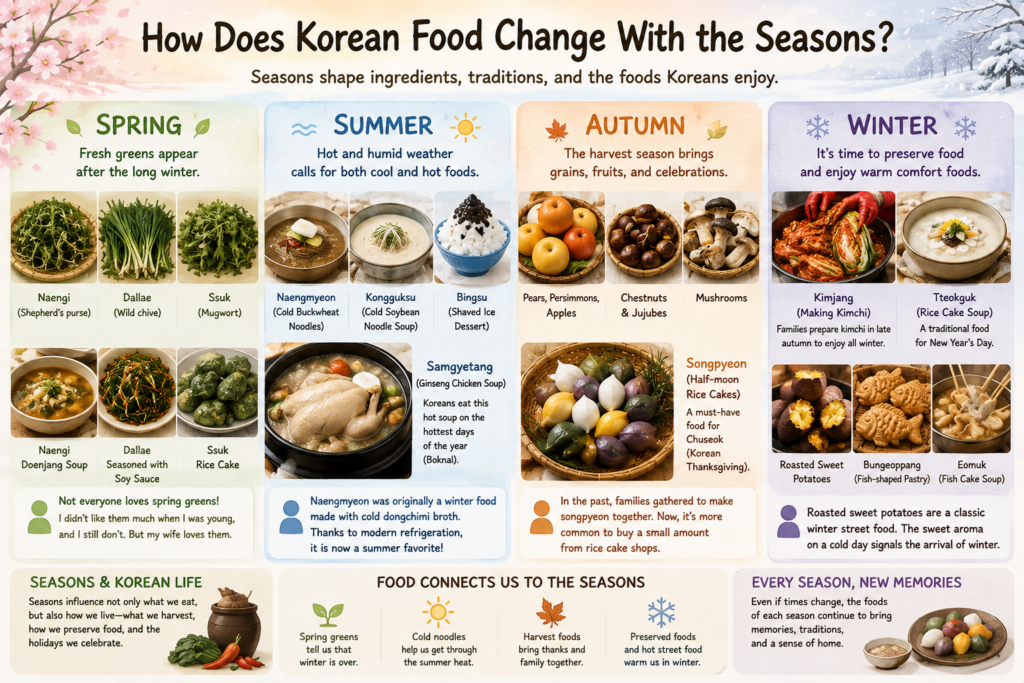
Explore Korean seasonal food through spring greens, summer noodles, Chuseok songpyeon, and the changing habits of our home kitchen.
The Same Spring Greens Can Bring Different Reactions
When spring arrives, ingredients such as naengi, dallae, and ssuk appear on Korean tables. They are familiar signs of the season, but not everyone welcomes them with the same enthusiasm.
As a child, I did not particularly like dishes made with spring greens. Even now, I would not call them favorites. My wife, on the other hand, loves them. The same seasonal ingredients bring different reactions in our home.
Seasonal foods are connected with personal preferences this way. For one person, they offer a taste worth waiting for. For another, they simply signal that the season has changed.
Many ingredients are now available throughout the year. Still, certain foods remain tied to particular times: cold noodles when the weather turns hot, or songpyeon as Chuseok approaches. Korean seasonal food reflects the combined influence of harvests, weather, holidays, and household habits.
Spring Adds New Aromas to Familiar Soups and Side Dishes
Spring greens can bring a seasonal change without transforming the whole meal. You might add naengi to a familiar doenjang soup or use dallae in a seasoned soy sauce.
Naengi, or shepherd’s purse, gives soybean paste soups and stews a distinctive aroma. Dallae, a small wild allium, can be used in sauces or seasoned vegetable dishes. Ssuk, or mugwort, appears in soups and rice cakes. Bomdong, a cabbage associated with late winter and early spring, can be made into geotjeori, a freshly seasoned vegetable dish.
If you are trying spring greens for the first time, notice their aroma as well as their appearance. A scent that differs from familiar vegetables can be part of what makes an ingredient appealing—or unfamiliar.
As my wife’s preferences and mine show, you do not have to love spring greens to enjoy Korean food in spring. Trying one or two and finding something you like is enough.
Cold Noodles Become a Summer Lunch at Home
On hot days, cold noodle dishes such as naengmyeon and kongguksu come to mind. Kongguksu consists of noodles in a broth made from blended soybeans, with a cool temperature and mild, nutty flavor.
Kongguksu has long been one of our summer foods. When we lived in Korea, we sometimes ate it about once every ten days during the hotter months. We made it at home or ate it at restaurants, and we have continued making it since moving to the United States.
Sometimes we cook the soybeans and make the broth ourselves. At other times, we buy prepared soybean broth for convenience. We prefer to season ours with salt rather than sugar.
That familiar meal also led us to try something different. Remembering pine nut noodles I had seen on television, we made the broth with pine nuts instead of soybeans. The cold noodle dish felt familiar, but the pine nuts gave it a different aroma. We shared that first attempt, along with photos, in our homemade jat-guksu story.
This does not mean jat-guksu is a standard summer meal in every Korean household. It was our way of adapting a lunch we already enjoyed. Seasonal eating can include trying a new version of a familiar favorite.
Summer Also Has a Place for Hot Food
Korean summer food is not all cold. Samgyetang often comes to mind around chobok, jungbok, and malbok, the three traditional summer days collectively known as sambok.
Samgyetang is a hot chicken soup prepared with ingredients such as glutinous rice, garlic, jujubes, and ginseng. It is connected with the custom of eating a substantial, nourishing meal during the summer heat. The expression iyeol chiyeol is often used to describe meeting heat with heat, but the custom does not need to be understood as a treatment for hot weather.
Some people make a point of eating samgyetang around these days. Others have their usual meals. Enjoying naengmyeon or kongguksu does not mean giving up hot soups for the summer.
The season influences food choices without setting one required temperature or menu. Familiar customs and what someone feels like eating that day matter too.
Autumn Connects Songpyeon With Chuseok Memories
Autumn draws attention to newly harvested rice, fruit, and chestnuts. As Chuseok approaches, songpyeon becomes another sign of the season.
I remember making songpyeon with my family when I was young. We put filling into the dough and shaped the rice cakes, and each person’s looked a little different. Both eating them and making them became part of my memories of Chuseok.
Songpyeon is made from rice flour dough with fillings such as sesame seeds or beans. Shapes and fillings vary by region and household.
Some families now buy the amount they need from a rice-cake shop or market instead of making a large batch at home. The way the food is prepared may change while its connection with Chuseok continues.
Seasonal foods can have different kinds of connections to the calendar. Some draw our attention because the ingredients are being harvested. Others come to mind because a holiday returns each year. Songpyeon brings together the harvest season and time spent with family.
Kimjang Prepared Households for Winter, but Storage Habits Have Changed
Kimjang traditionally involved making and storing large quantities of kimchi before winter. It connected the cabbage and radish harvests, falling temperatures, and the need to prepare vegetables for the colder months.
That does not mean kimchi was eaten only in winter. Kimjang was a seasonal task of preparing a large supply, while kimchi continued to appear at meals afterward. Our guide to kimchi explores kimjang and the different kinds of kimchi in more detail.
Our current household routine differs from preparing a large winter supply at once. We make some kimchi and buy some, preparing smaller amounts as we need them.
Our storage setup has changed too. We used a kimchi refrigerator in Korea, while we use a regular refrigerator in the United States. We discuss those changes in our look at Korean fermented foods through home experience.
The memories of seasonal food can remain even when the original practical need becomes less pressing. Meanwhile, the amounts prepared and the methods used can change from household to household.
Winter Brings Warm Foods and Traditions on the Calendar
On a cold day, foods such as roasted sweet potatoes and hot eomuk broth can feel especially welcome. When eaten outdoors, the contrast between cold air and warm food becomes part of the experience.
I like eomuk, hotteok, and bungeoppang. They are familiar snacks I have enjoyed regularly, rather than foods reserved for special occasions. Their association with winter does not mean they must be eaten only in winter. Our guide to Korean street food explains the individual foods and how to choose among them.
Other foods are linked to particular points on the calendar, such as patjuk, red bean porridge, on Dongji, the winter solstice. Small rice-flour balls called saealsim may be added. Not every household prepares it each year, but the familiar name “Dongji patjuk” preserves the connection between the food and the occasion.
Winter eating includes foods chosen for warmth, snacks that come to mind with the season, and dishes connected with recurring customs.
You Can Notice Seasonal Food While Grocery Shopping
You do not need to attend a special event to notice seasonal changes. The ingredients displayed at markets and supermarkets, or a new menu sign at a restaurant, can offer clues.
Spring greens may become more visible in spring, watermelons and Korean melons in warmer weather, and fruit and holiday ingredients around Chuseok. During kimjang season, cabbage, radish, and gochugaru may appear in large displays. Some restaurants add kongguksu to their summer menus.
Availability varies by shop and region. Storage and distribution also make many ingredients available outside their harvest season. A food on display is not necessarily freshly harvested at that moment.
When visiting Korea, consider both “What could I eat this season?” and “Which ingredients and dishes is this shop featuring now?” Looking at what you actually encounter can help you understand seasonal eating beyond a fixed list of dishes.
Seasonal Eating Looks Different in Every Home
The spring greens my wife enjoys, the kongguksu we eat for summer lunch, and the songpyeon I helped shape as a child connect with the seasons in different ways.
People do not have to enjoy the same seasonal foods or follow every custom. Some, like me, are not especially fond of spring greens. Some households try changing a familiar bowl of kongguksu into pine nut noodles.
The seasons place fewer limits on what we can eat today than they once did. Yet certain flavors still return to mind when the weather or calendar changes. Korean seasonal food lives on through those tastes and memories, as people fit them into their own lives.