Why Do Korean Meals Have So Many Side Dishes?
Learn why Korean meals include several side dishes, through rice pairings, prepared banchan, and the foods we make at home in the United States.
Several Small Dishes Come Together as One Meal
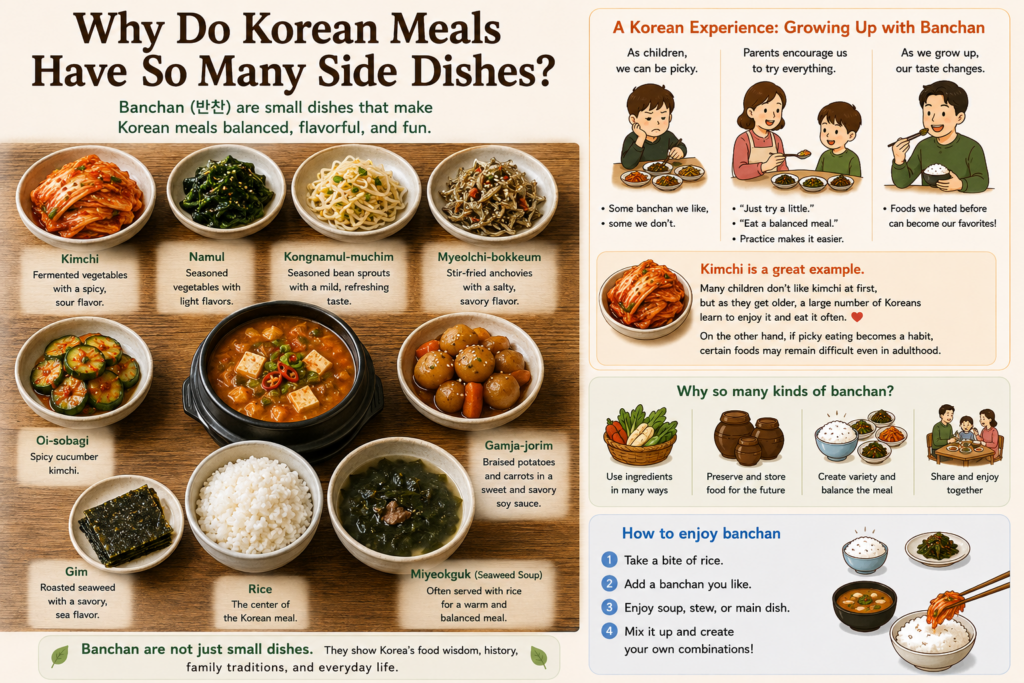
At a Korean restaurant, small plates may arrive before the food you ordered. As kimchi, seasoned vegetables, stir-fried dishes, and braised foods fill the table, you might wonder, “Did I order all of this?”
These foods are called banchan. They are usually translated as “side dishes,” but their role becomes clearer when you think about how they accompany rice and help make a complete meal.
You might have rice with kimchi, then try some seasoned vegetables. After a piece of fish and a spoonful of soup, you reach for another banchan. The foods remain on the table together, letting you move between them throughout the meal.
Several banchan offer different flavors and textures to enjoy with rice. Different ways of preparing ingredients, along with the habit of keeping some side dishes ready for later meals, help make this variety possible.
Mild Rice Gives Small Portions of Banchan a Place in the Meal
Rice cooked without additional seasoning has a relatively mild flavor. It provides a base for the acidity of kimchi, the saltiness of a braised dish, or the aroma of seasoned vegetables.
Strongly seasoned foods such as jangajji, pickled vegetables, or jeotgal, salted and fermented seafood, can taste very salty when eaten in large amounts on their own. A little alongside rice creates a different bite. More gently seasoned vegetables bring other textures and aromas.
Banchan do not need to be finished before the rice or main dish arrives. They are there to accompany the meal as you eat.
This arrangement lets you choose a different flavor with each bite of the same rice. Each small plate does not have to be a complete meal by itself. Its relationship with the surrounding food matters.
One Ingredient Can Become Several Different Banchan
Consider Korean radish. It can become kkakdugi, cubed radish kimchi; musaengchae, seasoned shredded radish; or part of a braised dish.
Even with the same ingredient, cutting, seasoning, and cooking it differently changes its flavor and texture. Blanched and seasoned vegetables, stir-fried foods, soy-braised dishes, and pickled or fermented foods can all contribute something different to one table.
Our homemade dotori-muk muchim is another example. Adding vegetables and seasoning to soft acorn jelly gives it flavors and textures that the jelly alone does not have. We share the preparation and photos in our homemade acorn jelly salad story.
If you would like to learn the names and types, see our beginner’s guide to Korean banchan. Here, the useful idea is that different preparations bring variety to a meal.
Several Banchan Do Not Mean Everything Was Made That Day
A home meal with several small plates can look time-consuming to prepare. But not everything on the table was necessarily made that day.
In our home, we bring out banchan already in the refrigerator and add the soup or stew and main dish prepared for dinner. Some side dishes carry over from one meal to the next, while the freshly cooked foods change.
These days, stir-fried nuts and stir-fried anchovies are regular fixtures among our banchan. Having familiar dishes like these ready lets us serve them alongside whatever we cook that day.
Side dishes prepared ahead and used across several meals are often called mitbanchan. Familiar examples include stir-fried anchovies, jangjorim, soy-braised beans, and pickled vegetables. Storage needs and keeping times vary by dish; they are not all meant to be kept for the same length of time.
Prepared banchan reduce the need to start every part of a meal from scratch. Some households also use side dishes purchased from specialty shops or supermarkets.
Since moving to the United States, we have made all our banchan other than kimchi ourselves. Banchan shops are not common where we live, and we find their prices relatively high. We make some of our kimchi and buy some, but prepare the other side dishes at home.
Some households buy their banchan, while others cook them as we do. Local availability and cost help shape how a family prepares its meals.
A table with several dishes can come from adding freshly cooked food to what is already prepared. It does not always require making many dishes at once.
The Same Household Can Eat Differently at Breakfast and Dinner
Being familiar with meals that include several banchan does not mean setting the same table three times a day.
Our breakfast is relatively simple: vegetables or salad, eggs, and fruit, with nurungji or rice porridge. Lunch is often noodles or a one-bowl meal. Dinner is more likely to include soup or stew, fish or meat, and some prepared banchan.
The meal changes even within one day. Our article on what we actually eat at home describes our breakfasts, lunches, and dinners in more detail.
Restaurants vary too. A baekban restaurant serving rice with assorted side dishes, a gukbap restaurant, and a Korean BBQ restaurant offer different accompaniments. Kimchi and kkakdugi fit naturally beside a bowl of soup and rice, while seasoned green onions and pickled vegetables work well with grilled meat.
The number of banchan alone does not tell you how Korean a meal is or how much care went into it. How the dishes complement the food matters more.
Growing Up With Many Banchan Does Not Mean Liking Them All
I was a picky eater as a child. Having several dishes on the table did not mean I reached for all of them equally.
As I mentioned in our seasonal food story, I did not particularly like spring greens when I was young, and they are still not favorites. My wife enjoys them, but my preferences are different.
We also like kimchi at different stages. I prefer it less fermented, while she likes it further along, with more sourness. Even the same banchan does not appeal to everyone in the same way. Our guide to kimchi explores its varieties and the changes that come with fermentation.
Having several banchan means encountering a range of flavors. It does not mean every Korean likes every side dish. Personal choices remain, even among familiar foods.
If you are trying banchan for the first time, there is no need to enjoy every flavor immediately. Taste small amounts and see how they work with rice and the other foods on the table.
Shared Dishes Let People Choose Different Combinations
When banchan are placed in the center of the table, people can take the foods they want while eating their own rice. Everyone does not have to receive an identical selection on an individual plate.
Which dishes people reach for varies. Diners can share the same table and foods while choosing different combinations.
Some restaurants serve individual portions of banchan, and people can also portion them onto separate plates at home. Banchan culture does not require everyone to eat directly from the same serving dish. Our article on how Koreans share food at the table explores how this varies by setting.
For practical questions about eating order, serving yourself, additional orders, and refills, see our guide to how to eat banchan at a Korean restaurant.
Look at How the Foods Work Together
To understand why a Korean table has several banchan, look at the rice, side dishes, and main food together.
Rice provides a mild base, while banchan vary the flavor and texture. Prepared dishes can be used across meals, and a freshly made soup or main dish brings a change. The people eating choose combinations that suit their tastes.
In our home, we do not make every side dish fresh each day or serve the same kind of meal from morning to evening. Nor do we love every banchan simply because we grew up with it.
Banchan are everyday foods that accompany rice, help us make use of what is already prepared, and allow different preferences to meet at one table.