Korean Sesame Oil: Why a Little Goes a Long Way
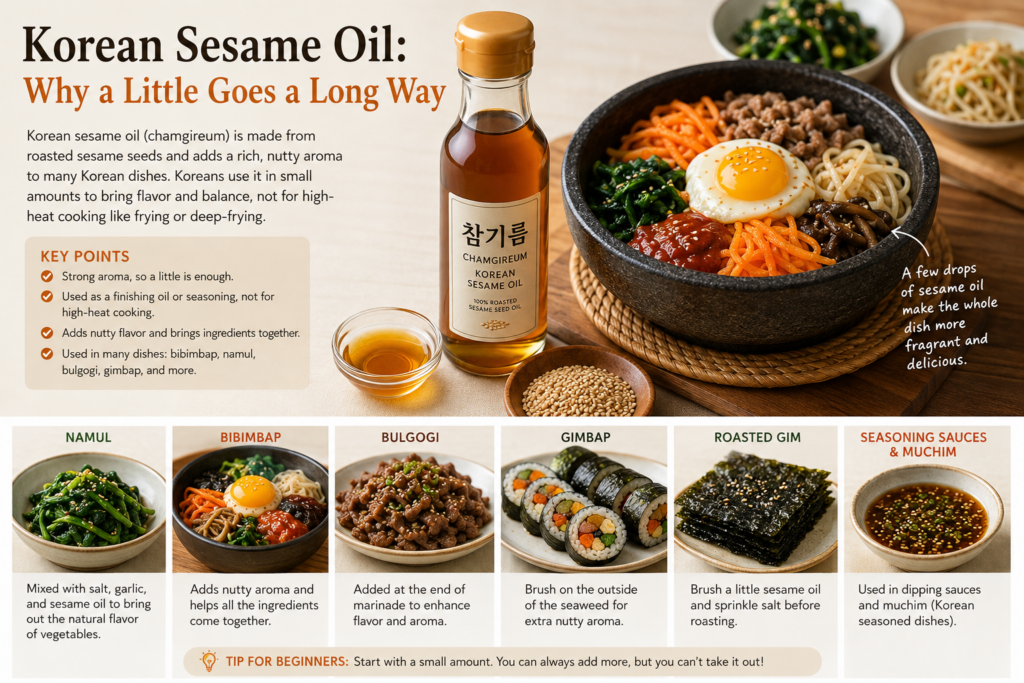
Learn how we use Korean sesame oil in stir-fries, bibimbap, namul, and gimbap, with tips on timing, choosing a bottle, and storage.
In Our Kitchen, We Use Different Oils for Cooking and Aroma
When we make beef and mushroom stir-fry at home, we cook the ingredients in avocado oil and add sesame oil and sesame seeds at the end. One oil helps cook the food in the pan; the other adds a nutty aroma.
Sesame oil is also a familiar ingredient when we season namul, or vegetable side dishes, and mix bibimbap. We use it in bulgogi marinades, too. It comes from the same bottle, but the amount and the point at which we add it vary by dish.
If you are new to sesame oil, think about the aroma you want to add before deciding how much to use. You should still be able to taste the mushrooms, vegetables, or meat beneath that nutty fragrance.
Toasted Sesame Oil Adds Aroma Like a Seasoning
Sesame oil is pressed from sesame seeds. The familiar nutty aroma in Korean cooking usually comes from oil made with toasted seeds. Open a bottle, and the difference from a mild cooking oil is easy to notice.
That aromatic, toasted sesame oil is what this article focuses on. Products made from untoasted seeds or refined sesame oil may also be labeled “sesame oil,” but their aroma and uses can differ.
Sesame oil does not adjust saltiness the way soy sauce does. If your namul needs more seasoning, adding sesame oil alone will not correct it. It will make the aroma stronger and the dish feel oilier.
When cooking, think of adjusting the seasoning and adding a nutty aroma as separate tasks. After adding sesame oil, notice both the fragrance and whether too much oil lingers in your mouth.
“Add It at the End” Means Different Things in Different Dishes
Advice to add sesame oil at the end can sound as though it should always go in after the food is fully cooked. In our kitchen, the process depends on the dish.
| Dish | When We Add It at Home | What It Does |
|---|---|---|
| Beef and mushroom stir-fry | As a finishing touch after cooking the ingredients in avocado oil | Adds a nutty aroma to the finished stir-fry |
| Namul | When tossing the prepared vegetables with seasonings | Distributes the oil and aroma through the vegetables |
| Bibimbap | When mixing the rice and vegetables | Spreads the aroma throughout the bowl |
| Bulgogi and other meat marinades | After mixing the other marinade ingredients | Adds aroma to the marinade before the meat goes in |
| Gimbap | Brushed lightly over the outside after rolling | Adds a nutty aroma to the seaweed |
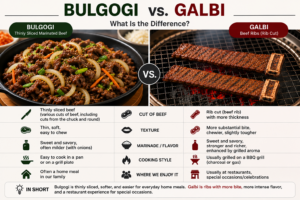
For bulgogi, we add sesame oil at the end of preparing the marinade, then marinate and cook the meat later. It does not mean we wait until the meat is cooked. Our bulgogi guide explains the meat we use at home and how we eat it.
There is no need to interpret this as a rule that sesame oil must never be heated. It can go into a marinade that is later cooked, or be brushed thinly onto seaweed before brief toasting. At home, though, we do not use large amounts as our main oil for prolonged cooking over high heat or deep-frying.
When following a recipe, check where the sesame oil belongs: during cooking, while mixing the seasonings, or as a finishing touch. Knowing its role makes it easier to use.
Consider the Sesame Oil Already in Your Bibimbap and Namul
Bibimbap contains several prepared vegetables alongside the rice and gochujang. Those vegetables may already have been seasoned with sesame oil, so there is no need to pour in more as soon as the bowl arrives.
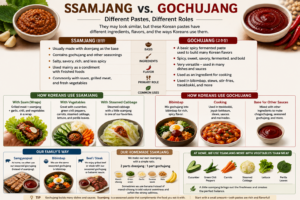
Mix and taste first. If sesame oil is served separately, add a little at a time when you want more aroma. The gochujang sauce may also contain sesame oil, so judge the finished bowl as a whole. Our bibimbap guide covers mixing the ingredients and enjoying the texture of dolsot bibimbap, served in a hot stone bowl.
The same principle applies to namul. Even when you notice the nutty aroma, you should still be able to distinguish the flavor and texture of spinach from soybean sprouts. With too much sesame oil, different vegetables can all greet you with the same dominant fragrance.
We use sesame oil in several vegetable side dishes at home, but we do not measure out the same number of spoonfuls every time. The amount of vegetables and the other seasonings vary. Our guide to Korean banchan explains how namul and other side dishes fit into a meal.
Brush Gimbap Lightly, and Treat Sesame Seeds as a Separate Addition
At home, we sometimes brush a little sesame oil onto the seaweed after rolling gimbap. This gives the outside a nutty aroma, in addition to the seasoning already in the rice and fillings.
There is no need to soak the surface. Since the rice and fillings are already seasoned, what matters is how everything tastes together in one piece. Our gimbap article describes the fillings we use and how we eat it at home.
Sprinkling sesame seeds and adding sesame oil do different things. The oil mixes through the food, adding aroma and an oily texture, while the seeds contribute a little bite and a nutty taste. We sometimes use both, as we do in our beef and mushroom stir-fry.
If you are out of sesame seeds, you do not need to make up for them with extra sesame oil. Likewise, sprinkling seeds in place of the oil will not produce the same texture or aroma.
Check for Toasted Sesame Oil, and Distinguish It from Perilla Oil
In a Korean grocery store, sesame oil and perilla oil may sit beside each other in similar bottles. Sesame oil comes from sesame seeds; perilla oil comes from perilla seeds. They have different aromas and are separate ingredients.
We also eat buckwheat noodles with perilla oil at home. The fragrance in that dish is different from the sesame oil aroma familiar from namul or bibimbap. If a recipe calls for sesame oil, remember that substituting perilla oil will change its aroma.
On English labels, distinguish “Sesame Oil” from “Perilla Oil.” For that familiar toasted sesame fragrance, look for wording such as “Toasted” or “Roasted Sesame.” The ingredient list can also tell you whether the bottle contains only sesame oil or a blend with other oils.
I have tried Japanese sesame oil that smelled different from the oil I was used to. When making Korean food, I prefer products with the aroma I grew up eating. That is my experience with particular products, not a way to classify every sesame oil by its country of origin.
Roasting levels and production methods can affect the aroma, too. A small bottle lets you try an oil in your food and see whether you like it. Our guide to essential Korean ingredients shows how it fits alongside other everyday seasonings.
Start with a Small Bottle and Follow the Storage Instructions
Because sesame oil is often used a little at a time, a bottle may last longer than you expect. If you do not cook frequently, consider how quickly you will use it rather than comparing large bottles on price alone.
Since aroma is a key reason for using it, avoid prolonged exposure to heat and light. Close the cap after use, and keep the bottle away from direct sunlight and the space beside a stove that heats up whenever you cook. Follow the product label for storage instructions, including whether to refrigerate after opening.
If you are trying sesame oil for the first time, mix a small amount into vegetables or rice you already eat and notice how the aroma changes. You cannot easily remove it once you have added too much, but you can always taste and add a little more.
An aroma that feels familiar to me may seem strong to someone trying it for the first time. Find your own amount by noticing whether you enjoy the nuttiness and can still taste the original ingredients.