Bibimbap: How Koreans Eat This Famous Mixed Rice Dish
Learn how to mix and eat bibimbap, adjust the sauce, and enjoy dolsot’s crispy rice, with stories from our home meals and flights back to Korea.
I Prefer Dolsot Bibimbap to the Bibimbap We Make at Home
Bibimbap is easy to recognize in photographs of Korean food. Colorful vegetables, seasoned greens, meat, and an egg sit over rice, with gochujang alongside them. But a photograph tells you only part of the story. The seasoning after mixing, the texture of the ingredients, and even the temperature of the bowl can change the experience.
I am not especially fond of the regular bibimbap we sometimes eat at home. Yet when I was at a restaurant and could not decide what to order, I often chose dolsot bibimbap, the version served in a hot stone bowl. I liked how it stayed warm while I ate and how the rice at the bottom became crisp.
Even with similar ingredients, regular bibimbap and dolsot bibimbap feel quite different to me. If you are trying bibimbap for the first time, it helps to notice which temperatures and textures you enjoy before deciding whether the dish is for you.
Bibimbap Does Not Have a Fixed Ingredient List
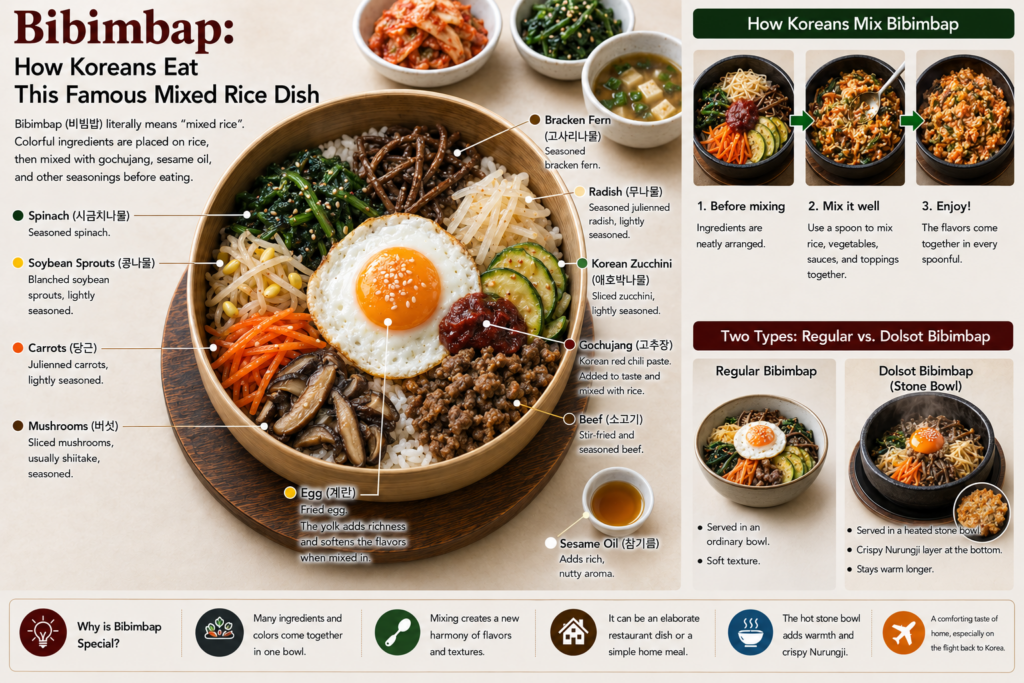
The name bibimbap describes rice mixed with other ingredients. It does not mean that every bowl must contain the same vegetables or meat. Both the ingredients and the seasonings vary between restaurants and households.
| Component | Common examples | What it contributes |
|---|---|---|
| Rice | Cooked white rice | A base that carries the vegetables and seasoning. |
| Namul and vegetables | Spinach, soybean sprouts, gosari (bracken fern), seasoned radish, and zucchini | Different flavors and textures, from tender greens to crunchy sprouts. |
| Other toppings | Beef, mushrooms, and egg | Additional savory flavors and textures; the selection varies. |
| Seasoning | Gochujang or another sauce, sesame oil | Different levels of heat, saltiness, and aroma depending on the combination and amount. |
Namul are vegetables that have been prepared and seasoned. They often bring salt and other flavors to the bowl already, so ingredients that look mild may not need much extra sauce. Meat and egg are optional, too.
If you follow a vegetarian diet, ask about the ingredients in the vegetables and sauce as well as any visible meat. A bowl full of vegetables does not tell you everything about how those vegetables were prepared.
Start With a Little Sauce, Then Taste After Mixing
I prefer to use slightly less gochujang so that I can taste the namul. I like the different vegetables to retain their own flavors rather than having the gochujang dominate every spoonful.
When your bowl arrives, check whether gochujang has already been added or is served separately. If it comes on the side, start with a little. Gochujang adds saltiness and sweetness as well as heat, and too much can overwhelm the vegetables. You can read more about the ingredient in our guide to gochujang.
Use a spoon to lift the rice from the bottom and fold it through the vegetables and sauce. Gently break up any clumps of rice. If your egg has a soft yolk, you can mix that in as well. Some people use chopsticks to loosen and combine the ingredients first, but a spoon is convenient for eating the mixed rice.
Taste a spoonful or two before adding more seasoning. It is easier to adjust the flavor after mixing than to undo too much sauce.
Sesame oil may already be in the bowl. If it is provided separately, add a little at a time and notice the aroma. Too much can make the other ingredients harder to appreciate. Our article on how Korean sesame oil is used explains its role in more detail.
Mixing bibimbap does not mean mashing everything together. You want the rice and seasoning evenly combined while keeping the different textures of the vegetables.
A Hot Stone Bowl Changes the Texture of the Rice
Regular bibimbap comes in an ordinary bowl, while dolsot bibimbap is served in a heated stone bowl. Regular bibimbap can also be served warm, so the distinction is not simply cold versus hot. The important difference is that the stone bowl continues to hold heat during the meal.
Rice in contact with the hot bottom can develop a golden, crisp layer. That warmth and texture are what I enjoy about dolsot bibimbap. A bite of crisp rice from the bottom feels different from the softer mixed rice above it.
If you like that texture, you can leave some rice against the bottom instead of scraping it all up immediately. There is no fixed number of minutes to wait: the heat of the bowl and the way the dish was prepared will vary. Pay attention as you eat so that the rice does not become too hard or burn.
The stone bowl can be very hot, so avoid picking it up with your bare hands.
You Do Not Need to Mix In Every Side Dish
Bibimbap may come with kimchi, a few other banchan, and soup. The ingredients inside your bowl are meant to be mixed, but you do not have to add everything served alongside it.
You can eat a spoonful of bibimbap, take a bite of kimchi, or have some soup in between. Soup is usually eaten separately. If the bibimbap is already well seasoned, there is no need to make the meal saltier by adding all the accompanying side dishes to the bowl.
For more about eating banchan during a meal and what to expect at a restaurant, see our guide to eating Korean banchan.
After Holidays, My Wife Makes Bibimbap With the Remaining Namul
When we make bibimbap at home, we mainly use namul that we have already prepared as side dishes. The ingredients change depending on what is available that day: seasoned soybean sprouts, spinach, mung bean sprouts, gosari, or other vegetables. We do not put all of these into every bowl.
After a holiday, my wife often makes bibimbap with the namul that remain. We use prepared vegetables on ordinary days as well, but after a holiday, the remaining namul naturally become ingredients for another meal.
There is no need to arrange everything by color as a restaurant might, or to include a certain number of vegetables. The combination of prepared namul determines what goes into that day’s bibimbap. Foods we had been eating separately as side dishes come together with rice to make a different-tasting meal.
Although regular bibimbap is not a particular favorite of mine, this is a familiar way we eat it at home. Every household is different, but our experience shows that making bibimbap does not always mean preparing several ingredients from scratch.
You can read more about how we use prepared side dishes and vary our meals in what Koreans really eat at home.
On a Flight Back to Korea, Bibimbap Feels Especially Welcome
Bibimbap on a flight back to Korea after an overseas trip brings up a different memory for me. Although ordinary home-style bibimbap is not usually one of my favorites, it was one of the in-flight meals I most enjoyed on the journey home.
After several days of eating food abroad, the combination of gochujang, sesame oil, namul, and rice felt especially familiar and welcome. The same food can make a different impression depending on when and where you eat it.
For me, bibimbap can be a warm restaurant meal with crisp rice at the bottom of a stone bowl. It can be something my wife makes with namul after a holiday. It can also be a familiar taste waiting on the flight home.
If you are trying it for the first time, begin with a little sauce and mix the bowl. Taste the vegetables and check the seasoning before adjusting it to your liking. When you have another chance to eat bibimbap, compare not just the ingredients but also the temperature of the bowl and the texture of the rice.