Gochujang for Beginners: What It Tastes Like and How Koreans Use It
Learn what gochujang tastes like, how we use it in bibimbap, tteokbokki, and homemade sauces, and what to check when buying your first container.
I Enjoy How Gochujang and Namul Come Together in Bibimbap
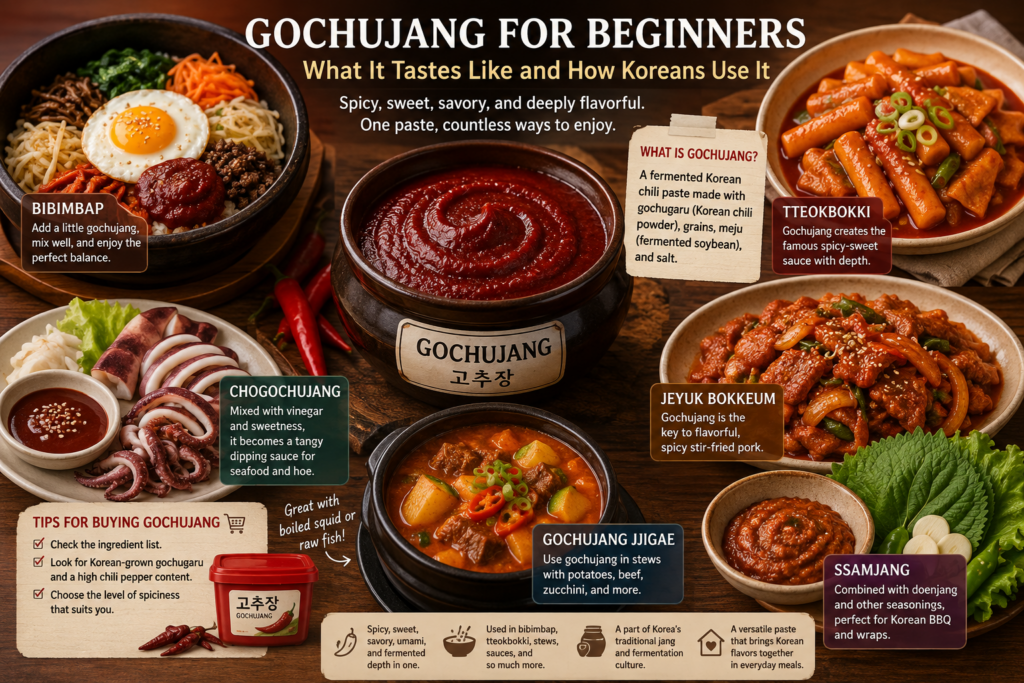
If I were to recommend one dish besides bulgogi to someone trying Korean food for the first time, I would choose bibimbap. To me, the combination of gochujang and namul, or seasoned vegetables, expresses the character of Korean food particularly well.
That does not mean adding more gochujang makes the bowl better. The vegetables may already be seasoned, and too much gochujang can make their individual flavors harder to notice. I recommend adding it gradually so you can still taste the namul.
Gochujang adds sweetness, saltiness, and umami along with heat. Understanding how it changes the seasoning of the whole dish makes it easier to use than thinking only about how spicy it is.
Gochujang Is a Thick Fermented Paste Made from Several Ingredients
Gochujang is a Korean jang made with ingredients such as gochugaru, grains, fermented soybean ingredients, and salt. Traditional methods and commercial formulations differ, and products sold under the same name do not all have the same flavor or texture.
It is thick when scooped from the container, and even a small taste can seem intense. In a dish, it contributes sweetness, saltiness, and fermented flavor as well as chili heat. Adding a lot just to make an already seasoned dish spicier may leave it sweeter or saltier than you intended.
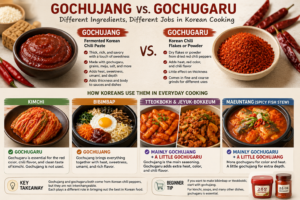
Gochugaru is ground dried chili pepper, while gochujang is a fermented seasoning made from several ingredients. Replacing one with an equal amount of the other will not produce the same result. Our comparison of gochujang and gochugaru explains their different uses in more detail.
Start Small and Adjust After Mixing
At home, we use yangnyeom gochujang, a seasoned gochujang sauce, in bibimbap. We combine gochujang with other seasonings before mixing it into the rice and namul.
Bibimbap is a useful way to experience how gochujang changes within a dish. Plain gochujang tastes different from a seasoned gochujang sauce, and both taste different again once mixed with rice and vegetables.
If gochujang or a gochujang sauce comes separately, add a little and mix thoroughly. Try a spoonful or two, then add more if the bowl needs it. If the sauce is already in the bowl, mix and taste before adding anything else.
There is no fixed number of spoonfuls that every bowl needs. The amount of rice, the seasoning of the namul, and the flavor of the gochujang all vary. If the bowl is already sweet and salty enough, adding more gochujang just for heat will strengthen those flavors too.
Judge the amount by how the rice and vegetables taste together, rather than by how red the bowl looks. Our guide to eating bibimbap explains mixing and the texture of dolsot bibimbap in more detail.
At Home, We Use It in Stews as Well as Tteokbokki
Gochujang is used for much more than mixing into rice. It can be part of the seasoning for tteokbokki or jeyuk-bokkeum, spicy stir-fried pork, and it can be dissolved into broth to make a stew. The other ingredients and cooking method change the result.
When we make tteokbokki at home, we use gochujang as the base of the seasoning and add a little gochugaru. We leave a fairly generous amount of broth and use sugar or allulose for moderate sweetness. We do not rely on gochujang alone to balance every flavor; we taste the rice cakes, fish cakes, and broth together.
We also sometimes make gochujang jjigae with potatoes, beef, and Korean zucchini. The same paste feels different in a spicy-sweet tteokbokki sauce and in a stew with potatoes and meat.
| Dish | What gochujang contributes | What to consider when adjusting the amount |
|---|---|---|
| Bibimbap | Seasoning and flavor for rice and namul. | Check that it does not overwhelm the vegetables. |
| Tteokbokki | Combines with broth and other seasonings to form the sauce around the rice cakes. | Taste for sweetness and saltiness as well as heat. |
| Jeyuk-bokkeum | Forms part of the seasoning coating the pork and vegetables. | Account for any added soy sauce and sweeteners. |
| Gochujang jjigae | Helps season and flavor the broth. | Adding more changes both flavor and consistency. |
Our guide to tteokbokki describes the ingredients and eating habits we enjoy at home.
Chogochujang and Ssamjang Add Other Flavors to Gochujang
The tangy red sauce served with seafood is often chogochujang. It combines gochujang with vinegar and ingredients that add sweetness. At home, we make it ourselves and serve it with ojingeo-sukhoe, or briefly boiled squid.
We add vinegar to gochujang and adjust the sweetness with sugar or maesil-cheong, Korean green plum syrup. The added acidity and sweetness create a different sauce from plain gochujang used as a dip.
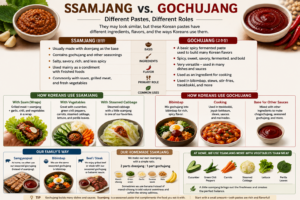
Ssamjang is usually made with doenjang and gochujang, along with seasonings such as garlic and sesame oil. A small amount is commonly eaten with meat or vegetables. If you buy gochujang expecting the ssamjang you enjoyed at a Korean BBQ restaurant, the flavor will be different. Our comparison of ssamjang and gochujang explains what to look for when choosing between them.
When shopping, also check whether you are buying plain gochujang or a prepared product such as bibimbap sauce or chogochujang. A sauce already adjusted for serving and a paste used as the base of a recipe serve different purposes, even if both are red.
I Check the Origin and Proportion of the Chili Powder
When buying gochujang, I look beyond the front of the package and read the ingredient label. When possible, I check whether it uses Korean-grown chili powder, and I compare the proportion of chili powder listed. Personally, I prefer products with a relatively high proportion.
That is my purchasing preference, not a quality standard everyone needs to follow. The percentage of chili powder alone does not tell you the heat level or overall flavor. For a first purchase, consider how much heat you enjoy and which dishes you plan to make.
Check the heat level if one is shown, and look at the grains and sweetening ingredients on the label. If you need to avoid particular ingredients, check each product’s ingredient list and allergen information.
You can also start with a small container based on how much you expect to use. Follow the product’s storage instructions before and after opening, use a clean utensil to scoop it out, and close the lid properly afterward.
Enjoying Gochujang Does Not Require a Love of Extreme Heat
I do not handle extremely spicy food particularly well myself. We adjust our homemade tteokbokki to a heat level we find comfortable. Enjoying the flavor of gochujang does not mean you need to buy the hottest version.
The heat of the finished dish depends on the gochujang itself, how much you use, any additional gochugaru or chili peppers, and the quantity of the other ingredients. Gochujang alone cannot tell you how spicy the whole meal will be.
Start by mixing a small amount into rice and vegetables you already eat. Then try another form, such as chogochujang with vinegar or a stew with gochujang dissolved into the broth. Experiencing how the same paste changes from one preparation to another will help you judge how much to use in your next dish.