Essential Korean Ingredients Every Beginner Should Know
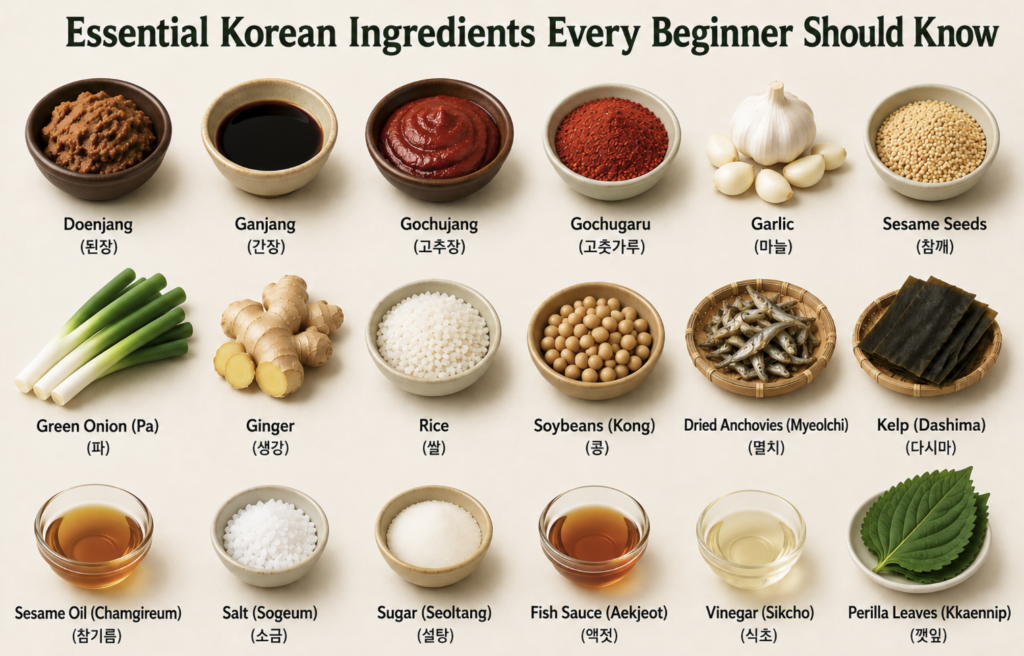
Learn essential Korean ingredients through our home cooking, with small-size buying tips, garlic preparation, seasoning uses, and flexible broth choices.
Start with What Each Ingredient Adds to the Food
Bulgogi, doenjang jjigae, and bibimbap are very different dishes, but many of the ingredients used to make them overlap. Soy sauce and garlic appear in meat marinades as well as seasoned vegetables. Sesame oil adds aroma to bibimbap, gimbap, and namul.
Learning these everyday ingredients makes an unfamiliar Korean recipe easier to understand. You begin to recognize what provides saltiness, where the heat comes from, and which ingredients add a nutty aroma.
The foods and seasonings in this guide are all basic Korean ingredients. My advice for someone starting out is to buy small quantities. Use them a little at a time, become familiar with their flavors, and discover which ones you reach for most often.
Doenjang, Ganjang, and Gochujang Build Different Flavors
Doenjang, ganjang, and gochujang belong to the Korean family of seasonings called jang. They are everyday kitchen staples, but each contributes something different.
Doenjang, Korean fermented soybean paste, adds saltiness and a deep, earthy soybean flavor. It is used in soups and seasoned vegetables as well as doenjang jjigae. At home, we sometimes choose a product sold specifically for jjigae when making stew, while using regular doenjang for namul. We think about what we are preparing when choosing the paste. Our beginner’s guide to doenjang explains its uses, while our doenjang jjigae guide focuses on the finished stew.
Ganjang, Korean soy sauce, provides saltiness and umami in marinades, braised dishes, stir-fries, seasoned vegetables, and dipping sauces. In our home, we do not make a strict distinction between jin-ganjang and yangjo-ganjang every time we cook. We generally use a familiar product. We also use guk-ganjang for certain purposes, such as adding a little to miyeokguk, Korean seaweed soup. The differences are explained in our guide to Korean soy sauce.
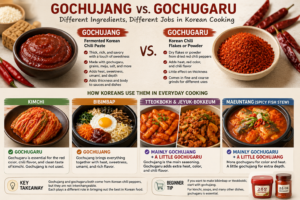
Gochujang, Korean fermented chili paste, contributes more than heat. It brings sweetness, saltiness, fermented flavor, and thickness to a seasoning. That is why it works in bibimbap, tteokbokki, and jeyuk-bokkeum, or spicy stir-fried pork. When buying it, I tend to check the origin and proportion of the chili powder. That is my purchasing preference, rather than a rule everyone needs to follow. Our beginner’s guide to gochujang covers its flavor and everyday uses in more detail.
Gochugaru and Gochujang Have Different Uses
Gochugaru is made from dried Korean chili peppers ground into flakes or powder. It adds red color and chili flavor to kimchi, stews, and seasoned vegetables.
Gochujang already contains sweetness, saltiness, and a thick paste texture. Replacing gochugaru with the same amount of gochujang can therefore change both the flavor and consistency of a dish.
At home, we use coarse gochugaru for much of our everyday cooking. We sometimes use fine gochugaru for dishes such as musaengchae, a seasoned shredded radish dish, yukgaejang, or bibim-naengmyeon sauce, where a finer texture works well. We keep our gochugaru tightly sealed in the freezer.
Our guide to fine and coarse gochugaru explains how we choose between them. The presence of chili seasoning does not mean every dish will be equally hot, either. Ingredients and preparation both affect how spicy Korean food actually tastes.
Garlic, Green Onion, and Ginger Are Everyday Kitchen Staples
Garlic, green onion, and ginger are basic ingredients we we use across meat and fish dishes, soups, stews, kimchi, and seasoning mixtures.
We buy whole garlic bulbs or peeled cloves. When we need minced garlic, we chop it in a food processor or similar kitchen tool. We freeze the portion intended for longer-term use. We also cut up leftover green onions and freeze them.
Having them prepared saves us from peeling and chopping garlic or trimming green onions from the beginning every time we cook. It is a small habit that makes everyday Korean cooking more convenient in our home.
Ginger is also a basic ingredient we use in meat dishes, fish dishes, and kimchi. The amount depends on what we are making, and some individual dishes do not need it. For example, we do not add ginger to the cooking water for our beef suyuk.
Rather than memorizing one rule for garlic or ginger, pay attention to the aroma each brings to the particular food you are preparing.
Sesame Oil, Sesame Seeds, and Perilla Oil Add Aroma and Nuttiness
Sesame oil adds a roasted, nutty aroma to bibimbap, namul, gimbap, and meat marinades. We use it in many dishes, but adjust the amount because its aroma is strong.
For our beef and mushroom stir-fry, for example, we cook with avocado oil and add sesame oil at the end. The oil used for frying and the oil added for its finishing aroma have different jobs. Our guide to Korean sesame oil looks at these uses more closely.
Sesame seeds can be sprinkled whole over food or crushed before being added. They are often used with sesame oil, but also provide small bites of nutty flavor and texture.
Perilla oil is another ingredient we use at home. Its aroma is different from sesame oil. We use it in dishes such as perilla oil soba noodles and pork rib kimchi jjigae. Getting to know each oil’s aroma helps you understand why they give food different characters.
Choose Broth Ingredients According to the Dish
Dried anchovies and dashima, or dried kelp, are basic ingredients for broths used in soups, stews, and noodle dishes. Even when you cannot see them in the finished food, they can contribute to its flavor.
We sometimes make broth by simmering anchovies and kelp ourselves. But we do not use the same broth for every dish. At other times, we use a stock coin, a small compressed broth seasoning, or save the cooking liquid from meat for another meal. The choice depends on what we are making, so there is no single rule that describes it.
Our pork rib kimchi jjigae uses an anchovy stock coin. After making beef suyuk, we sometimes use the remaining beef broth for miyeokguk or muguk, Korean radish soup. These are choices for particular dishes, rather than a claim that one method is always better.
Knowing both the basic broth ingredients and the prepared products available gives you more options when cooking. Our homemade pork rib kimchi jjigae is one example of how we use a convenient broth ingredient at home.
A dish that appears to contain only vegetables may still use anchovy or meat broth. If you avoid animal ingredients, check what went into the broth as well.
Fish Sauce, Salt, Vinegar, and Sweeteners Balance the Seasoning
Fish sauce, or aekjeot, adds saltiness and umami. In our home, it is used not only in kimchi but also in dotori-muk muchim and the seasoned bok choy we serve with suyuk. A vegetable dish containing fish sauce is not made entirely from plant ingredients.
Salt is used to salt vegetables and adjust the seasoning of finished food. Soy sauce, doenjang, and fish sauce already contribute saltiness, so it helps to taste the combined seasoning before adding more salt.
Vinegar adds acidity to seasoned vegetables and cold noodle dressings. We use it in our perilla oil soba dressing and seasoned bok choy, among other foods.
Sugar, syrups, honey, maesil-cheong, and allulose are different ways to add sweetness. Maesil-cheong is Korean plum syrup. Depending on the dish, sweet ingredients may help create a sweet-savory soy sauce seasoning or balance other strong flavors. We use different ones for different foods at home; that does not mean they can all be substituted in equal amounts.
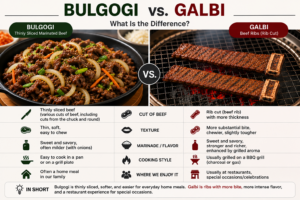
Fruit such as Korean pear or apple can also be used in meat marinades. However, fruit is not a required ingredient in every version of bulgogi or galbi.
Get to Know Rice, Soybeans, Tofu, Tteok, and Perilla Leaves Too
Seasonings are only part of the picture. Other basic ingredients give Korean meals their substance and texture.
- Rice: Used for porridge as well as bowls of cooked rice. For our hobakjuk, we blend soaked regular rice with squash.
- Soybeans and tofu: Soybeans are eaten in their own right and are also ingredients in Korean jang. Tofu appears in stews and side dishes, and we include it in our steamed vegetable breakfast too.
- Tteok: Used in foods such as tteokguk and tteokbokki. Shapes and textures vary by dish. Tteokbokki can be made with either rice-based or wheat-based tteok.
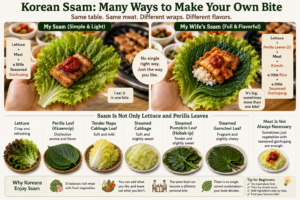
- Perilla leaves: Used for wraps, seasoned side dishes, and other preparations. We also slice them over our perilla oil soba noodles.
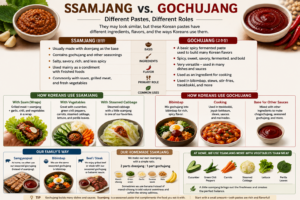
Another familiar seasoning is ssamjang, a paste commonly made with doenjang, gochujang, and other ingredients. It can accompany vegetables as well as meat. We make our own and use it more often with vegetables at home. Our guide to ssamjang explains the mixture and how we eat it.
Start with Small Packages of Basic Ingredients
These are not specialty ingredients intended for just one recipe. They appear repeatedly in different foods and help create the flavors of Korean cooking.
If youIf you are buying them for the first time, I recommend smaller containers of pastes, oils, and gochugaru. Buy fresh ingredients in modest quantities too, so you can learn how much you actually use. Follow the storage instructions on each product.
After cooking a few dishes, you will begin to notice how often soy sauce and garlic appear together, how a little sesame oil changes the aroma, and how broth choices can vary even within the broad category of stew.
Our own kitchen does not follow one fixed method for every ingredient. We prepare garlic and green onions for the freezer, choose pastes with their uses in mind, and decide on broth according to the food we want to make.
Using basic ingredients a little at a time and making them familiar in your own kitchen is, to me, a good way to begin cooking Korean food.