Kimchi Jjigae: How Koreans Turn Aged Kimchi Into Comfort Food
Discover kimchi jjigae, from choosing well-fermented kimchi to adding pork, canned tuna, or tofu and enjoying this familiar Korean stew with rice.
The Flavor of Kimchi Jjigae Starts With the Kimchi
At first glance, kimchi jjigae may look like a spicy stew with kimchi, meat, and tofu in a red broth. Taste a spoonful, and you will also notice the kimchi’s sourness and saltiness, along with the savory flavor of pork or tuna. The way these flavors go with rice is a big part of the dish’s appeal.
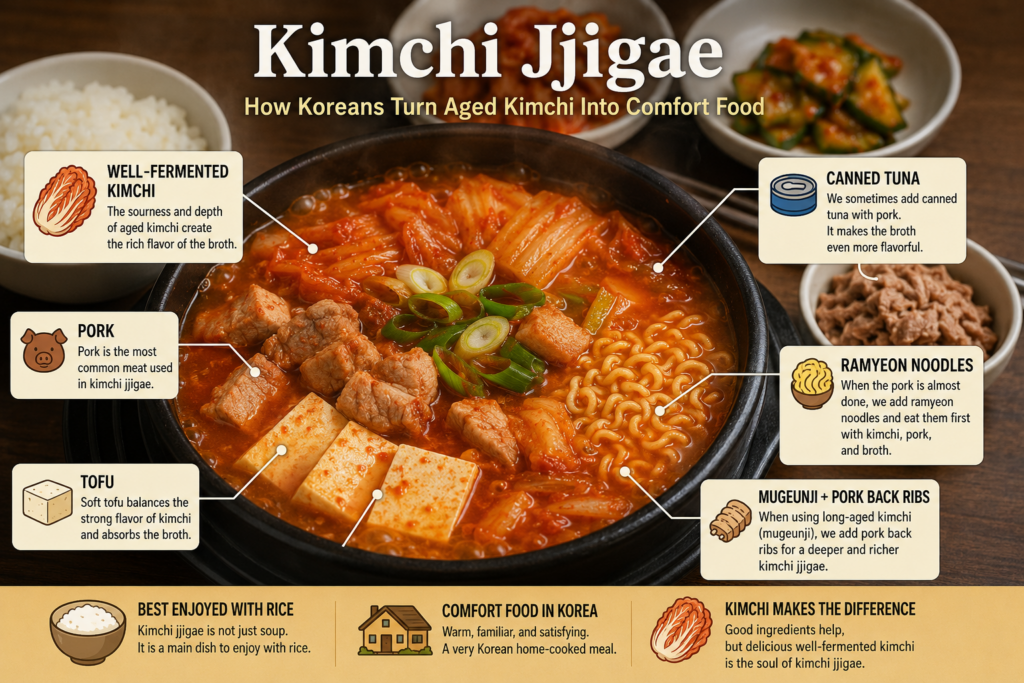
To me, kimchi is the most important ingredient in kimchi jjigae. Even good meat and generous additions cannot quite make up for kimchi that does not taste good. With delicious, well-fermented kimchi, it is much easier to build a flavorful stew.
In our home, we sometimes use pork and canned tuna together. When we have mugeunji, or long-aged kimchi, we sometimes cook it with pork back ribs. Depending on the kimchi and what we add, the same dish can be an everyday stew served with rice or a more substantial meal with plenty of meat.
Napa Cabbage Kimchi With Some Sourness Works Well
Kimchi jjigae is usually made with napa cabbage kimchi. Kimchi that has fermented enough to develop noticeable sourness works particularly well because its flavor still comes through after water or broth and other ingredients are added.
You can make the stew with freshly made kimchi, but it will taste different. Less-fermented kimchi brings more of the fresh cabbage and seasoning flavors, while well-fermented kimchi gives the stew its characteristic tang. Kimchi that tastes a little too sour to you as a side dish may be just right in a stew.
You do not need mugeunji every time you make kimchi jjigae. Mugeunji refers to kimchi aged for a long time, while ordinary napa cabbage kimchi that has fermented well in the refrigerator can also make a good stew. When choosing kimchi for jjigae, consider its flavor and how far it has fermented, rather than simply how old it is. For more about different kinds of kimchi and how their flavor changes, see our guide to kimchi.
The sourness described here comes from normal fermentation. This does not mean that spoiled kimchi can be made safe by cooking it.
Pork, Canned Tuna, and Tofu Each Bring Something Different
Pork is a familiar choice for kimchi jjigae, but it is not required. Canned tuna, tofu, and vegetables are other common additions. The ingredients and amounts vary from home to home, changing both the broth and what you find in each spoonful.
We sometimes use pork alone, but we also make kimchi jjigae with both pork and canned tuna. By tuna, I mean the canned kind, not fresh tuna used for sashimi. I find that adding tuna alongside the pork gives the broth even more flavor. You do not have to choose just one; using both is one of the ways we enjoy the dish at home.
Tofu plays a different role. When the kimchi and seasonings taste strong, a soft piece of tofu makes a mouthful feel milder. Tofu that has taken on some of the broth is also good over rice. Adding tofu does not, however, remove the heat from the whole pot.
| Ingredient | What It Adds |
|---|---|
| Pork | Substantial pieces of meat and a richer, savory broth. |
| Canned tuna | Savory tuna flavor that blends into the broth. We sometimes use it together with pork. |
| Tofu | A soft texture and mild flavor that contrast with the kimchi. |
| Onion and green onion | Additional vegetable flavor and aroma alongside the kimchi and meat. |
At a restaurant, the dish name can help you choose. Pork kimchi jjigae and tuna kimchi jjigae offer different flavors. The amount of tofu and other ingredients varies by restaurant.
We Sometimes Add Back Ribs to Mugeunji or Noodles to the Stew
When we make kimchi jjigae with mugeunji at home, we add pork back ribs. The sourness of the aged kimchi combines with the flavor of the ribs, and the kimchi softens as it cooks. Eating the meat off the bones with some kimchi makes this feel a little more special than our everyday stew.
Back ribs are not a standard ingredient in every mugeunji stew, nor are they necessary for ordinary kimchi jjigae. This is simply one way we enjoy long-aged kimchi at home.
Adding ramyeon noodles changes the order in which we eat. We put the noodles in when the pork is almost cooked, then tend to eat the noodles first once they are ready, along with the fully cooked pork, kimchi, and broth. Noodles soften and swell if left too long, so we do not leave them sitting while we eat as leisurely as we might with just rice and stew.
Some restaurants offer extra noodles, often called ramyeon sari on the menu. Check whether they are available. They are an optional addition for when you want noodles soaked in the stew’s broth, rather than an essential part of kimchi jjigae.
Try It With Rice and Solid Ingredients, Not Just Broth
Kimchi jjigae is usually eaten with rice. Several spoonfuls of broth on their own can make the sourness, saltiness, or heat feel quite strong. Try a spoonful of rice with a little kimchi, tofu, or pork, then taste some broth. This makes it easier to understand how the stew works as part of a meal.
You can alternate between rice and stew, or put a little broth and some solid ingredients over your rice. You do not need to mix your entire bowl of rice into the stew at the start. If you are sharing a pot, serve some into your own bowl to eat with your rice.
The stew may taste more sour than you expect. In kimchi jjigae made with well-fermented kimchi, that tang is an important part of the flavor. Sourness and heat are different, though. One version may be noticeably tangy, while another may have stronger heat from the kimchi seasoning or added chili flakes. A single restaurant’s version cannot tell you what every kimchi jjigae will taste like.
If you are not comfortable with spicy food, start with small amounts. Kimchi already contains seasoning, so reducing the extra seasoning does not necessarily make the stew mild. Our guide to spiciness in Korean food explains how ingredients and preparation affect the heat.
Comparing It With Kimchi Guk and Doenjang Jjigae
Kimchi guk and kimchi jjigae both use kimchi, but kimchi guk usually has more broth, while kimchi jjigae has a greater proportion of kimchi, meat, tofu, and other solid ingredients. If you think of kimchi jjigae simply as “kimchi soup,” its concentrated flavor and generous ingredients may surprise you. For more about the names and how these dishes are served, see the differences between guk, tang, and jjigae.
Doenjang jjigae has a different flavor base. Kimchi jjigae centers on the sourness and seasoning of fermented kimchi, while doenjang jjigae centers on the earthy, savory flavor and aroma of fermented soybean paste. Both go well with rice, but which one you prefer is personal.
I prefer doenjang jjigae, while my wife prefers kimchi jjigae. I also tend to like less-fermented kimchi, while she prefers kimchi that has developed more sourness. Thinking about it, our preferences for how far kimchi has fermented may carry over into our choice of stew.
Calling kimchi jjigae familiar home cooking does not mean it is every Korean’s favorite food. It fits naturally into everyday meals because kimchi already at home can be combined with pork, tuna, or tofu and served with rice. For a broader look at where dishes like this fit into daily meals, see what Koreans really eat at home.
To appreciate kimchi jjigae, notice the kimchi’s sourness and the flavors of the other ingredients as well as the heat. Try the difference between well-fermented kimchi with pork, a version with added tuna, and mugeunji with back ribs. Within this one familiar dish, you may find a combination you especially enjoy.