Galbi: A Beginner’s Guide to Korean Grilled Short Ribs
Learn about Korean galbi, from beef and pork ribs to saeng galbi, marinated galbi, and LA galbi, with tips for choosing and enjoying them at a restaurant.
Galbi Does Not Refer to Just One Marinade or Shape
If you know Korean galbi only as beef marinated in a sweet soy sauce seasoning, seeing saeng galbi or pork galbi on a menu may be confusing. One order might arrive as a long strip of meat attached to a single bone, while another has several small pieces of bone lined up inside a thin strip of meat.
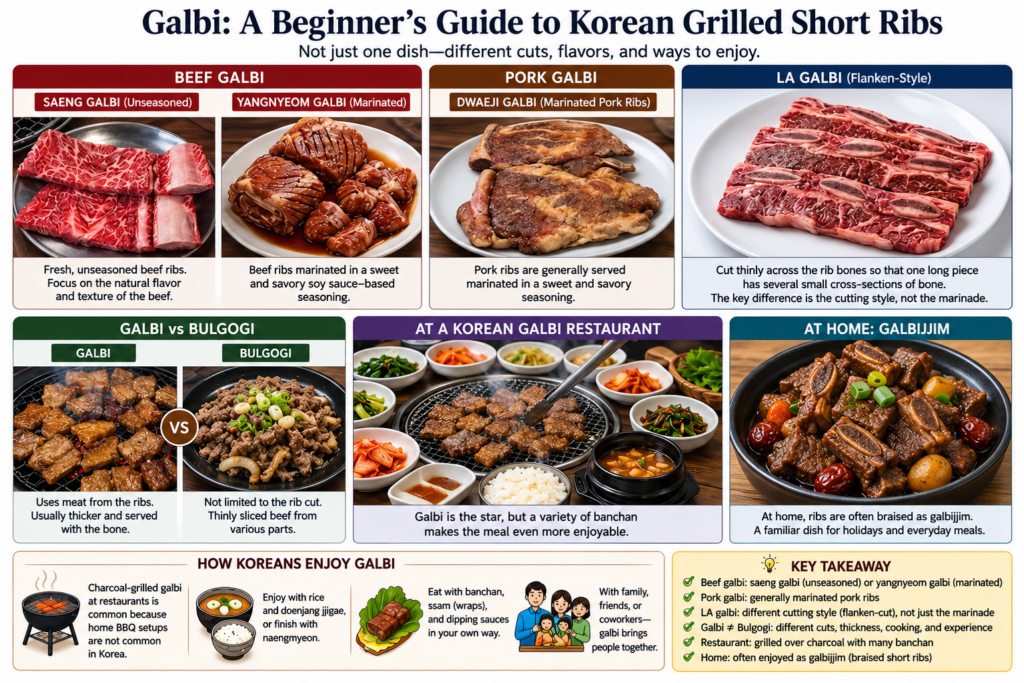
Galbi refers to ribs and the meat around them. Korean restaurants serve both beef and pork galbi, and the appearance and flavor change with the marinade and the way the meat is cut. To make your first choice easier, consider three things: whether it is beef or pork, whether it is marinated, and how the meat and bones are cut.
For me, galbi is connected to the pleasure of eating out as well as the flavor of the meat. Grilling it at a restaurant while trying different side dishes feels different from cooking it in a pan or air fryer at home, even when the main ingredient is similar.
Look for Saeng or Yangnyeom Beef Galbi and Check the Pork Marinade
Restaurants specializing in beef galbi often offer both saeng galbi and yangnyeom galbi. Saeng galbi means ribs that have not been marinated. The word saeng does not mean you should eat them raw. The meat is grilled, allowing you to taste the beef itself and notice its juices and texture more directly.
Yangnyeom galbi is usually marinated in a sweet and savory seasoning based on soy sauce. Garlic, sesame oil, and other ingredients may be added, but recipes vary by restaurant and household. As the meat cooks, the marinade adds its own flavor and aroma, creating a different experience from saeng galbi.
Pork galbi is commonly served with a sweet and savory marinade. Comparing it with samgyeopsal, another familiar Korean pork BBQ choice, helps clarify the difference. Samgyeopsal is pork belly and is usually grilled without a marinade, while pork galbi is familiar as marinated meat from the rib area. For more about pork belly, see our guide to samgyeopsal.
| Menu Name | What to Know |
|---|---|
| Beef saeng galbi | Beef ribs served without a marinade and cooked on the grill. |
| Beef yangnyeom galbi | Beef ribs prepared with a marinade, usually based on soy sauce. |
| Pork galbi | Pork ribs, commonly served marinated at restaurants. |
| Galbisal | Usually boneless rib meat. Check the menu for the type of meat and whether it is marinated. |
| LA galbi | Beef ribs sliced thinly across the bones. The name describes the cut rather than whether the meat is marinated. |
These names describe different things. Beef and pork identify the meat; saeng and yangnyeom distinguish the marinade; LA refers to the cutting style. That means LA galbi can also be marinated.
When I Have Both, I Start With Saeng Galbi
When ordering both kinds of beef galbi, I eat saeng galbi first. Tasting the beef on its own before moving to the sweet and savory marinated version makes the difference easier to appreciate. After strongly seasoned meat, saeng galbi can seem relatively mild.
I feel I can eat more meat when I start with saeng galbi. After several pieces of yangnyeom galbi, the sweetness and strong seasoning can become a little too much for me, so I prefer to enjoy plenty of saeng galbi first and then have a smaller amount of marinated galbi.
Some colleagues from outside Korea whom I have eaten with preferred yangnyeom galbi. I remember them enjoying the combination of meat and its sweet and savory marinade. That reflects the preferences of the people I ate with, rather than a general rule about visitors from other countries.
You do not need to decide which is better before trying them. If the restaurant’s minimum order allows you to taste both, compare them for yourself. Starting with saeng galbi is a way to compare flavors, not a rule of dining etiquette.
Recognize LA Galbi by the Row of Bones in a Thin Strip
When galbi arrives unfolded into a long strip, it can be difficult to picture its original shape. One way of preparing it is to slice the meat attached to a rib into a thin, long piece that can be opened out. It is then grilled and cut into pieces that are easier to eat.
LA galbi is cut thinly across the rib bones. This leaves several small cross-sections of bone lined up within one strip of meat. If you first encountered Korean ribs in the United States, this may be the shape you recognize.
Thinking of LA galbi as another name for marinated galbi can make menus confusing. LA galbi is often marinated, but ribs prepared along the bone with the meat unfolded can be marinated too. The key difference is the direction of the cut and the resulting shape.
Galbisal usually arrives as boneless rib meat, so expect a different presentation from ribs with the bone attached. Butchering styles and menu descriptions vary. Looking at a photo or asking whether the meat comes with bones can help you choose.
Check the Order Size and Enjoy the Side Dishes Too
Once you have chosen your meat, check the serving size and weight listed beside the price. The amount can differ between menu items even when each is labeled “one serving.” It also helps to check the minimum initial order and whether you can combine saeng galbi and yangnyeom galbi to meet it. If these details are unfamiliar, see how to read a Korean restaurant menu.
When the galbi arrives, first check whether the staff will grill it for you. Marinade can burn and stick to the grill as yangnyeom galbi cooks. If residue builds up, you can ask the staff to clean or replace the grill plate. For the full process, from ordering and grilling to ordering more, see how to eat Korean BBQ for the first time.
I also enjoy the banchan, or side dishes, that arrive while we wait for the meat. At restaurants I have visited, these have included yangnyeom gejang, or spicy marinated crab; jeon, Korean savory pancakes; salad; water kimchi; and hobakjuk, pumpkin porridge. Not every galbi restaurant serves these dishes, but discovering the rest of the table is part of the pleasure of eating there.
Try a little while you wait, then continue eating the banchan alongside the grilled meat. You do not need to put everything inside a lettuce wrap or onto the grill. For serving yourself and asking for refills, see how to eat Korean banchan.
Try your first piece of saeng galbi plain, then add a little salt or the sauce provided by the restaurant to another piece. Taste yangnyeom galbi on its own first as well, so you can judge the sweetness and saltiness of the marinade before adding more sauce.
When eating galbi with my family, I like having rice and doenjang jjigae, fermented soybean paste stew, alongside it. The meal feels less rich than eating meat alone, and I enjoy the meat more with rice. At a work dinner where we eat meat first, I sometimes finish with naengmyeon, cold noodles. Eating galbi does not mean you have to wait until the end to order rice.
At Home, Ribs Can Be Grilled or Made Into Galbijjim
Going to a specialty restaurant for charcoal-grilled galbi is a familiar way to eat out in Korea. In housing such as apartments, where using a charcoal grill indoors is impractical, the restaurant’s grill and ventilation make the meal much more convenient. That does not mean people never cook galbi at home. We sometimes use a pan or an air fryer ourselves.
Galbijjim, or braised ribs, uses a different cooking method. The ribs cook with seasoning and liquid until tender, so the flavor and texture differ from galbi cooked on a grill. It can be served for holidays and family gatherings, but it is not limited to those occasions.
You can see how we prepare pork back ribs as both soy-glazed ribs and kimchi jjigae in two home meals we make with pork back ribs. These are different dishes from grilled beef galbi, but they show how we use rib cuts in several ways at home.
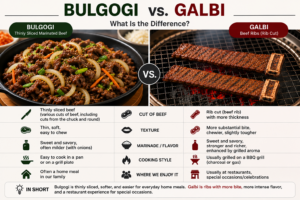
If you are choosing between bulgogi and galbi, start by comparing the meat. Bulgogi usually uses thinly sliced meat, while galbi uses prepared rib cuts. Sharing a soy sauce seasoning does not make them the same dish. For a closer comparison of texture, cooking methods, and choosing between them at home or at a restaurant, see the differences between bulgogi and galbi.
When choosing galbi for the first time, look beyond the description “sweet Korean grilled meat.” Knowing whether it is beef or pork, whether you want saeng or marinated galbi, and how the bones and meat are presented makes the menu easier to navigate. From there, taste the different styles and find the galbi you enjoy most.