What Korean Food Should a Complete Beginner Try First?
Choose your first Korean meal by the flavors you enjoy. Compare bulgogi, bibimbap, gimbap, and more, with practical tips on spice, portions, and side dishes.
If I Had to Recommend Just One Dish, I Would Choose Bulgogi
When someone trying Korean food for the first time asks me to recommend just one dish, bulgogi comes to mind first. Thinly sliced beef in a sweet and savory soy sauce marinade offers flavors that are relatively easy to imagine, even if the name is unfamiliar. So far, serving bulgogi to international guests has never gone badly for me. That experience is why it remains my first suggestion.
Still, there is no reason to recommend it to someone who does not eat beef or dislikes sweet marinades. A bowl of rice and vegetables may suit one person better, while another may prefer grilling meat with a group.
Choose your first dish according to the flavors and kind of meal you already enjoy. Along with spice level, think about the main ingredients, texture, and who you are eating with.
Narrow Your Choices by What You Already Like
You do not need to understand every name on the menu. Find a preference below that sounds like yours, then check how the dish is served.
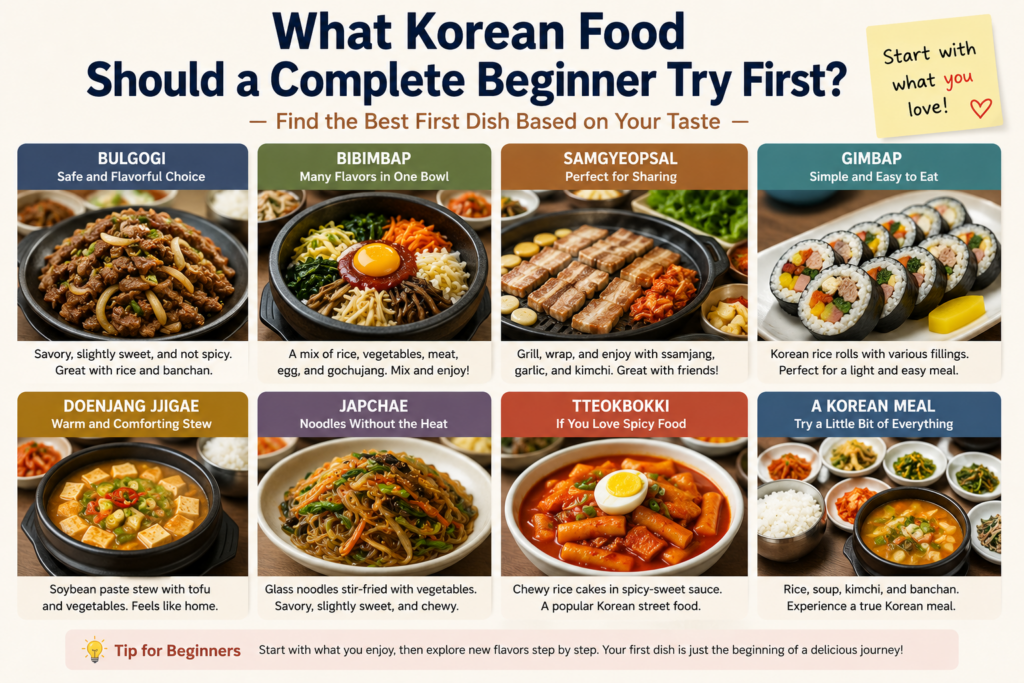
| What you enjoy or want from the meal | A dish to consider | What to check before ordering |
|---|---|---|
| Sweet and savory beef | Bulgogi | Whether it has a soy sauce marinade and whether rice is included. |
| Vegetables and rice in one bowl | Bibimbap | Whether gochujang can come separately and whether meat is included. |
| Grilled meat with a group | Samgyeopsal | Whether you cook it yourself and whether there is a minimum order. |
| A simple rice-based meal | Gimbap | The fillings and whether any are spicy. |
| A warm stew with tofu and vegetables | Doenjang jjigae | Whether chili peppers are added and what goes into the broth and stew. |
| Spicy-sweet seasoning and a chewy texture | Tteokbokki | The heat level and whether it can be adjusted. |
You will not necessarily find all these dishes in one restaurant. Korean BBQ restaurants, casual bunsik eateries, and general Korean restaurants offer different menus. Once you have a dish in mind, check that the restaurant serves it.
With Bulgogi, Check the Marinade and Serving Style
The bulgogi I recommend here is beef marinated in a soy sauce-based seasoning. Some dishes with “bulgogi” in their name use a gochujang-based marinade, so the name alone does not guarantee a mild dish.
Soy-marinated beef bulgogi goes well with rice. If banchan, or side dishes, arrive with it, start with the beef and rice, then try the side dishes one at a time. There is no need to taste every side dish immediately or mix them all into the meat.
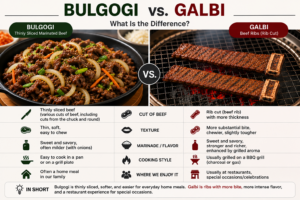
Bulgogi also comes in different forms. Grilled bulgogi with little liquid feels different from a simmering version with vegetables and glass noodles. At home, we eat both grilled bulgogi and a hot pot version. If you expect a plate of meat without broth, check the menu photo and description. Our guide to bulgogi explains these styles in more detail.
If sweet marinades do not appeal to you, consider unmarinated grilled meat or another dish. Recommending bulgogi as a starting point does not mean it will be everyone’s favorite.
For a Meal on Your Own, Consider Bibimbap or Gimbap
Besides bulgogi, bibimbap is the other dish I would recommend for a first Korean meal. To me, the flavors of gochujang and namul—seasoned vegetables—are one of the combinations that best express the character of Korean food. Mixing the vegetables and seasoning into rice lets you experience those flavors together in one bowl.
Bibimbap combines rice with vegetables, namul, and other toppings. If the gochujang comes separately, you can add it a little at a time to adjust the flavor. Some restaurants serve the bowl with sauce already added, so ask when ordering.
I am not particularly fond of ordinary bibimbap at home, but I have often ordered dolsot bibimbap at restaurants when I could not decide what to eat. I like how the hot stone bowl keeps the meal warm and makes the rice at the bottom crisp. Whether you prefer soft rice or a crispy layer can help you choose, too. Our guide to eating bibimbap explains how to enjoy the bowl.
Gimbap is rice and fillings rolled in seaweed and sliced into pieces. You can eat it one piece at a time without figuring out how to combine several dishes. I like tuna gimbap, while my wife prefers vegetable gimbap. Even within this one food, the fillings make a difference to what each of us enjoys.
Plenty of vegetables do not necessarily make a dish vegetarian. Gimbap may contain egg, ham, imitation crab, or fish cake, while bibimbap may include meat and egg. If you avoid particular ingredients, check what is actually in the dish rather than relying on its name.
For Grilled Meat with a Group, Consider Samgyeopsal
Samgyeopsal is pork belly, often served unmarinated for grilling. You can taste the pork on its own, then try it with leafy wraps, dipping sauces, or kimchi. This makes it another option if you do not enjoy sweet meat marinades.
Pork belly is a fatty cut, though. I find very fatty pieces difficult to eat in large amounts and prefer pieces with relatively less fat. Enjoying meat does not automatically mean you will enjoy the richness of pork belly.
Grilling at the table also takes more time than receiving a finished plate. Check whether the staff will cook for you or you will do the grilling, and what quantity makes sense for your group. If this will be your first visit, see our guide to eating Korean BBQ for the first time.
Think About Broth and Spice Separately
If you like warm stews, doenjang jjigae is worth considering. It brings together the fermented aroma of soybean paste, the texture of tofu and vegetables, and rice eaten alongside it. But a dish with broth is not necessarily mild. At home, we add a little Cheongyang chili or jalapeño to our doenjang jjigae.
If you already enjoy spicy food, you might choose tteokbokki from the beginning. Think about whether you will enjoy the chewy rice cakes and the sweetness of the sauce as well as the heat. You may be comfortable with chili but unfamiliar with the texture of tteok.
I once ate dakgalbi, spicy stir-fried chicken, and nakji-bokkeum, spicy stir-fried octopus, with a non-Korean friend who enjoyed spicy food. My friend liked both dishes. That experience reminded me that a beginner does not always need a mild recommendation. It does not mean those same dishes will be comfortable for everyone, especially since heat levels vary between restaurants.
Being new to Korean food and being new to spicy food are two different things. Explain the level of heat you normally enjoy and ask whether the dish can be adjusted.
Choose a Main Dish, Then Check What Comes with It
Once you choose a dish, check whether rice is included, whether the portion is intended for one person, and whether sauce can be served separately. Rice may need to be ordered separately with bulgogi, and some meat dishes may have a minimum order.
Japchae is generally eaten as a side dish with rice or alongside other foods. It combines glass noodles with vegetables and meat, seasoned with ingredients such as soy sauce and sesame oil. Presenting it as a complete meal on its own, like a bowl of noodles, can give the wrong impression. If japchae appears on the table, enjoy its chewy texture and seasoning alongside your rice and main dish.
If kimchi is served, you do not have to eat a large amount right away. Try a little between bites of rice or meat. Whether you like that kimchi does not determine whether Korean food as a whole suits your taste.
If I know little about someone’s preferences and must suggest one dish, I would start with soy-marinated beef bulgogi. If they want to experience the combination of gochujang and namul, I would recommend bibimbap. For a simple meal, gimbap may fit; for grilling meat together, samgyeopsal may be the better choice.
Finding one dish you enjoy is enough for your first meal. When you are ready to decide what to try next, continue with our guide to exploring Korean food.