Bulgogi: Understanding Korea’s Famous Marinated Beef
Explore bulgogi’s sweet-savory flavor, pan-cooked and hot-pot styles, and how we enjoy it with rice, vegetables, and glass noodles at home.
We Enjoy Bulgogi in Two Different Ways at Home
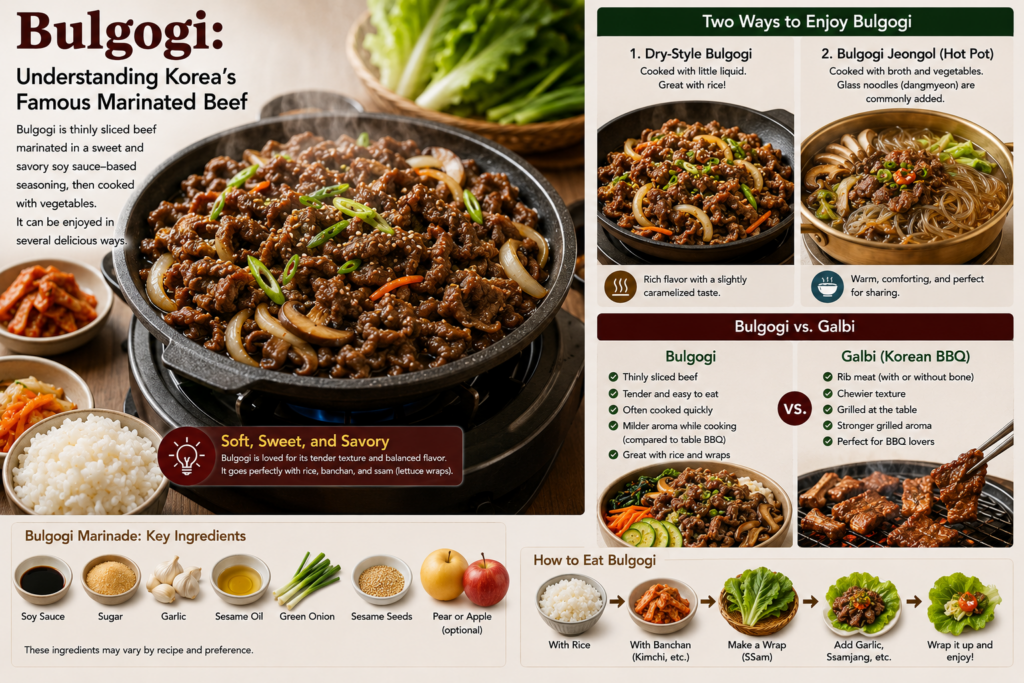
Bulgogi often brings to mind thinly sliced beef coated in a sweet and savory marinade. But it can feel quite different served as a plate of meat or as a hot pot with broth.
We prepare it both ways at home. Sometimes we cook the beef and vegetables with very little liquid remaining. Other times, we add enough broth to make bulgogi jeongol, a hot-pot-style dish. When we make the hot pot, we like to include dangmyeon, Korean glass noodles.
I enjoy both versions. With less liquid, the flavor and texture of the seasoned beef come through more directly. With jeongol, there is warm broth to enjoy along with the meat, vegetables, and noodles that have absorbed the seasoning.
To understand bulgogi, pay attention to the amount of liquid and the cooking method as well as the marinade. These differences help explain why your next order of bulgogi might look different from the first one you tried.
Thinly Sliced Beef and a Soy Sauce Marinade Create the Basic Flavor
This article focuses on beef bulgogi, or so-bulgogi. It is generally made by seasoning thin slices of beef with a soy sauce-based marinade before cooking. The thin slices combine readily with the seasoning, cook relatively quickly, and are convenient to eat with rice.
There is no single required cut of beef. In Korea, butcher shops and supermarkets sell meat already sliced for bulgogi, so making it at home does not necessarily involve slicing a large piece of beef yourself.
Common marinade ingredients include soy sauce, sugar or another sweetener, minced garlic, sesame oil, black pepper, and green onion. Some recipes use grated pear, apple, or onion, but pear is not essential to every version of bulgogi.
Soy sauce provides saltiness and savory depth, while sweetness balances the seasoning. Garlic, green onion, and sesame oil add aroma. For more about the different types and uses of soy sauce, see our guide to Korean soy sauce.
The sweetness varies between households and restaurants. Some bulgogi tastes noticeably sweet, while other versions emphasize the beef and soy sauce. One serving does not represent every version of the dish.
At home, we make the marinade ourselves and use it to season the beef. We keep our bulgogi a little less sweet. We enjoy its familiar sweet and savory flavor, but adjust the sweetness to suit our taste.
Bulgogi With Less Liquid and Bulgogi Jeongol Offer Different Pleasures
Bulgogi does not have to be grilled over charcoal. It can be cooked in a frying pan, on a bulgogi grill pan, or in a pot with broth.
| What to notice | Bulgogi with little liquid | Bulgogi jeongol |
|---|---|---|
| How it is served | Meat and vegetables coated in seasoning, with little liquid remaining. | Meat and vegetables served with plenty of broth. |
| What you enjoy | The flavor of the seasoned beef and vegetables. | The beef and vegetables, plus the broth and other additions. |
| How we eat it at home | We eat the beef with plain white rice. | We add glass noodles and enjoy the broth-soaked noodles too. |
Along with glass noodles, our bulgogi jeongol includes enoki or king oyster mushrooms, tofu, Korean rice cakes, green onion, and garlic. The mushrooms, tofu, and rice cakes make it a different meal from eating the beef on its own.
The glass noodles absorb the sweet and savory broth. Their texture is different from that of the beef and vegetables, so adding them changes the experience even when the beef seasoning is similar.
Vegetables such as onion, green onion, and mushrooms also take on the seasoning and meat juices as they cook. When eating bulgogi, try the vegetables alongside the beef rather than picking out only the meat.
A little liquid does not automatically make a dish bulgogi jeongol, though. Pan-cooked bulgogi can retain some moisture released by the meat and vegetables. Look at the menu description and the way the dish is served together.
At a Restaurant, Check Whether It Arrives Fully Cooked
Some restaurants serve bulgogi fully cooked, while others cook it in a pan or pot at the table. Seeing the word “bulgogi” on a menu does not necessarily mean you will be grilling the meat yourself.
If you are visiting a restaurant for the first time, you can ask, “Does it come fully cooked?” Bulgogi jeongol may be intended for sharing, so also check the serving size or minimum order on the menu.
In my experience, restaurant bulgogi has often left less grilled-meat smell on my clothes than galbi or other meats cooked directly on a grill. I have noticed this particularly with bulgogi cooked in a pan or pot, or brought out from the kitchen already cooked. Ventilation and cooking methods make a difference, so this is not true of every restaurant.
There are days when I want the experience of grilling meat at the table. On other days, when I am concerned about the smell lingering on my clothes, bulgogi can be a comfortable choice.
Taste the Beef First, Then Try It With Rice
If you are eating bulgogi for the first time, taste a piece of beef on its own, then try it with plain white rice. This makes it easier to notice how the sweetness and saltiness of the marinade work with the rice. Have some kimchi or another banchan between bites if you like.
If lettuce or perilla leaves are provided, you can use them to make a wrap. Bulgogi is already seasoned, so taste it before adding much ssamjang. Our article on eating Korean ssam with lettuce and perilla leaves explains the wrapping method in more detail.
Without wrapping leaves, simply alternate between rice and meat or place a little beef over your rice. With bulgogi jeongol, serve yourself some beef, vegetables, and glass noodles, and taste the broth as well.
Because bulgogi is already seasoned, the combination of beef and rice is a useful starting point before adding more sauce.
How Do Galbi and Pork Bulgogi Differ?
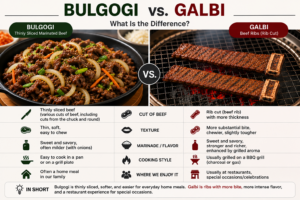
Bulgogi and marinated galbi can share a sweet and savory soy sauce flavor. Beef bulgogi generally uses thinly sliced meat, while galbi uses rib meat. Even when the marinades contain similar ingredients, the thickness, texture, and cooking methods can differ.
I find thinly sliced bulgogi softer and easier to eat than galbi. That is one reason I choose it when I want beef that I can comfortably enjoy with rice. For a closer look at the cuts and what to consider when ordering, see the differences between bulgogi and galbi.
Pork bulgogi uses a different meat, and its seasoning can differ too. Soy sauce versions exist, but spicy marinades made with gochujang or gochugaru are also common. Rather than assuming that anything called “bulgogi” is beef or mild, check both the meat and the seasoning.
Our Beef and Mushroom Stir-Fry Is a Separate Dish
We also cook other dishes that combine beef and vegetables. One example is the beef and mushroom stir-fry featured in Our Korean Home Kitchen.
My wife developed that dish to suit our taste after taking inspiration from palbochae, a Chinese-style dish served in Korean Chinese restaurants. Our version includes shiitake mushrooms and bok choy, with oyster sauce as the main seasoning. Its preparation and flavor differ from bulgogi made by marinating beef in a sweet soy sauce mixture.
Thinly sliced beef and vegetables do not automatically make a dish bulgogi. At our table, sweet and savory bulgogi and oyster-sauce-based beef and mushroom stir-fry feel like two different menu choices.
If bulgogi is new to you, begin by tasting the soy-seasoned beef with rice. Another time, compare a version with little liquid to a hot pot with glass noodles. As we have found at home, you may enjoy both for different reasons.