Why Are Fermented Foods So Important in Korea?
Explore Korean fermented foods through childhood memories of meju, everyday jang, and how our kimchi habits changed after moving to America.
The Meju Smell That Filled a Room in My Childhood
When I think about Korean fermented foods, one particular smell from my childhood comes to mind.
I remember seeing meju, blocks of cooked soybeans, being prepared and dried at home as part of making jang, Korea’s traditional sauces and pastes. When the meju was left to ferment in a warm room, its smell filled the space. As a child, I did not find it pleasant.
At that age, I noticed the smell long before I understood anything about fermentation. But I grew up watching doenjang, ganjang, and gochujang being made, and those seasonings became part of the food we ate every day.
Today, we mostly buy our jang. We make some of our kimchi and buy some as well. The preparation and storage methods have changed, but fermented foods are still part of our table.
Looking at both those childhood scenes and our ordinary meals today helps explain why fermentation remains so important in Korean food.
A Way to Preserve Food Became a Familiar Flavor
Before refrigeration and food distribution developed as they have today, people needed ways to keep harvested vegetables, soybeans, and fish for later use. Salting, drying, and fermentation were important ways to preserve and use ingredients.
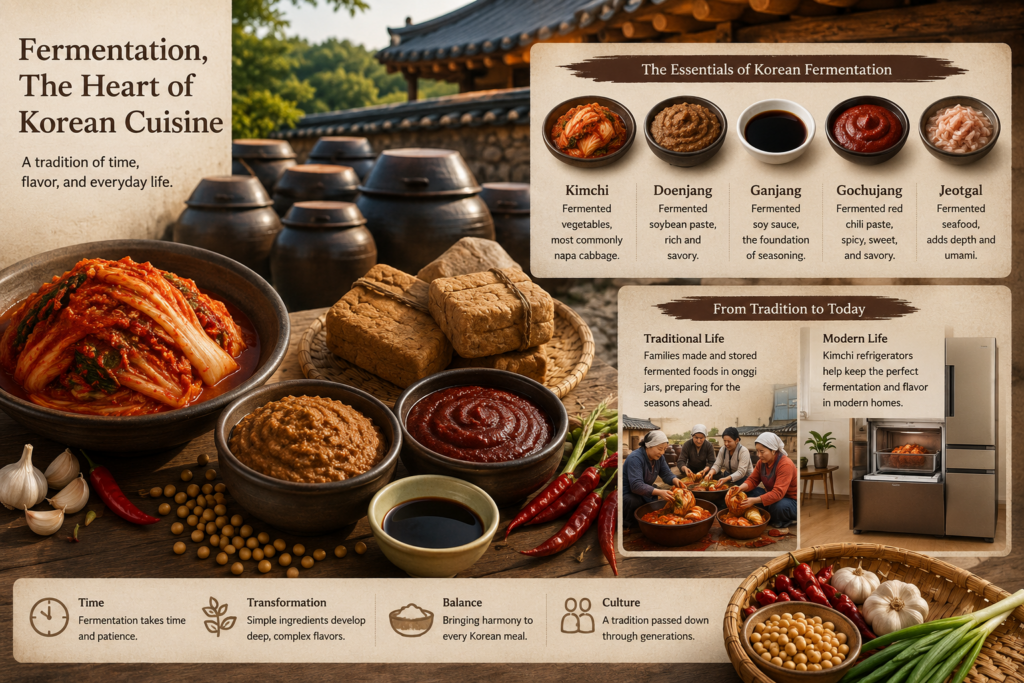
The flavors changed in the process. Cabbage became kimchi, while soybeans became the foundation for seasonings such as doenjang and ganjang. Seafood aged with salt became jeotgal or fish sauce, used at the table and in cooking.
During fermentation, microorganisms and enzymes transform components of the ingredients. The changes in aroma and flavor depend on the ingredients and the process.
Today, we have refrigerators and can easily buy the foods we need. Yet we continue eating doenjang jjigae, kimchi, and soy-seasoned dishes because those flavors have become part of familiar meals.
I do not choose doenjang jjigae because I am specifically thinking about eating fermented food. It is simply a dish I like and eat often. Fermentation is already part of that everyday flavor.
Jang Made with Meju Develops Differently from Kimchi
The meju I saw as a child was made from soybeans. Cooking the beans, shaping them into blocks, and drying and fermenting them are important parts of traditional jang making.
In one traditional method for making doenjang and ganjang, meju is aged in brine. The liquid and solids are then separated and developed into soy sauce and soybean paste. Gochujang uses ingredients such as chili powder, grains, and meju powder, so it is not made simply by separating the same mixture into liquid and solids. Modern commercial products also vary in how they are made.
Although both kimchi and jang are associated with fermentation, their ingredients and processes differ. Fermented foods do not all have to taste sour or share the same aroma.
- Kimchi can develop noticeable sourness as it ferments.
- Doenjang has a deep, earthy soybean flavor and saltiness.
- Ganjang contributes saltiness and umami.
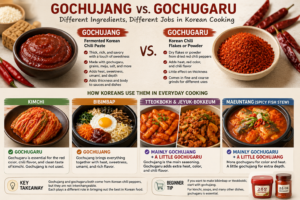
- Gochujang combines heat, sweetness, saltiness, and fermented flavor.
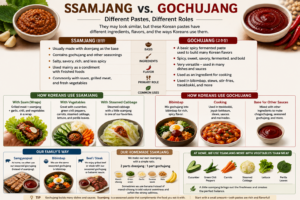
Our guides to how Koreans use doenjang and what gochujang tastes like and how we use it explore their roles in individual dishes. The key point here is that fermentation does not describe one single flavor.
The Same Kimchi Can Appeal at Different Stages
Kimchi makes the changes brought by fermentation easy to notice at the table. Freshly prepared kimchi and well-fermented kimchi can taste and smell different even when they began with the same ingredients.
My wife and I prefer different stages. I like kimchi that is less fermented, while she enjoys it further along, with more sourness. With the same kimchi in front of us, one person may think it is just right while the other would prefer to let it ferment a little longer.
That is why I would not say that longer aging automatically makes kimchi better. Personal preference and the way the kimchi will be used both matter.
At home, we make kimchi jjigae with well-fermented kimchi. We also use mugeunji, long-aged kimchi, with pork back ribs. The flavor we want when taking small bites of kimchi as banchan can be different from the flavor we want in a stew.
Our guide to kimchi explains its varieties and changing flavors, while our kimchi jjigae article looks at how we use fermented kimchi in cooking.
From a Kimchi Refrigerator in Korea to a Regular Refrigerator in America
When we lived in Korea, we used a kimchi refrigerator. In the United States, we store our kimchi in a regular refrigerator.
In our experience, the kimchi we keep in our regular refrigerator becomes sour more quickly. The type of kimchi and storage conditions can make a difference, but in our current household, this affects how much we prepare at a time.
We now make or buy smaller amounts as we need them. We do not insist on making all our kimchi ourselves, nor do we buy all of it.
Refrigerating kimchi does not mean its flavor stays exactly as it was on the first day. For us, preparing an amount we can enjoy at the stage we like has become more important.
Continuing a fermented-food tradition does not necessarily mean making the same quantities or using the same storage methods as before. In our home, both have changed to suit where we live and how we store our food.
Fermented Foods Stay on the Table Even When We Buy Our Jang
I watched jang being made at home when I was young. Today, the doenjang, ganjang, and gochujang in our kitchen are mostly products we buy.
We use doenjang for stews and seasoned vegetables, ganjang to season meat and vegetables, and gochujang in bibimbap and other seasoning mixtures. Even without making jang from the beginning, its flavors remain part of our everyday cooking.
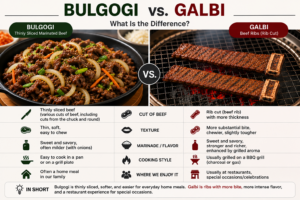
We do make our own ssamjang. But that means combining already-made ingredients, including doenjang and gochujang, to suit our taste. It is different from starting with soybeans and fermenting the jang itself.
A kitchen where traditional jang is made looks different from one where commercial products are used. The connection is in using familiar fermented seasonings to prepare food we enjoy.
Our guide to essential Korean ingredients introduces these seasonings alongside the other basics we use at home.
Fermented Ingredients Make More Sense in a Finished Dish
The aroma of doenjang or fish sauce may seem strong at first. I did not enjoy the smell of meju as a child, yet I enjoy doenjang jjigae today. Smelling something during its preparation and tasting it in a finished dish are different experiences.
Doenjang becomes part of a stew with broth, tofu, and vegetables. Ganjang combines with garlic and other seasonings to flavor meat. A small amount of fish sauce adds saltiness and umami to a seasoning mixture.
Our homemade dotori-muk muchim, a seasoned acorn jelly salad, is one example. We season the jelly and vegetables with soy sauce, fish sauce, gochugaru, garlic, sesame oil, and other ingredients. The soft jelly and crisp vegetables may be what you notice first, but part of the flavor comes from fermented seasonings.
That does not make the acorn jelly itself a fermented food. Eating a fermented food and using a fermented ingredient to prepare another dish are different ways fermentation can appear in a meal. Both are familiar parts of an ordinary Korean table.
If you are trying Korean food for the first time, it may be easier to understand a strong seasoning by tasting it in a dish rather than sampling a large amount on its own. Notice the savory depth of doenjang jjigae, the flavor of gochujang mixed into bibimbap, or the acidity that fermented kimchi brings to a stew.
Preparation Changes, but Familiar Flavors Continue
In my childhood, the smell of meju filled a warm room. Today, we use store-bought jang and prepare manageable amounts of kimchi for our regular refrigerator.
Much about our lives has changed. But I still enjoy doenjang jjigae, and my wife and I still have our own preferences for how fermented our kimchi should be.
The importance of fermentation in Korean food goes beyond its history as a way to preserve ingredients. The flavors it produces become family preferences and the foundation of meals made day after day.
For me, fermented foods connect the smell of a room in my childhood with the food on our table today.