Gochujang vs. Gochugaru: What Is the Difference?
Compare Korean chili paste and flakes through kimchi, bibimbap, and soups, and learn why swapping them changes sweetness, saltiness, and texture.
Gochujang Is a Fermented Seasoning, While Gochugaru Is Ground Dried Chili
If you are new to Korean cooking, gochujang and gochugaru may seem similar. Both add red color and heat, and dishes such as tteokbokki and jeyuk-bokkeum sometimes use both. It is natural to wonder whether you can keep just one and use it in place of the other.
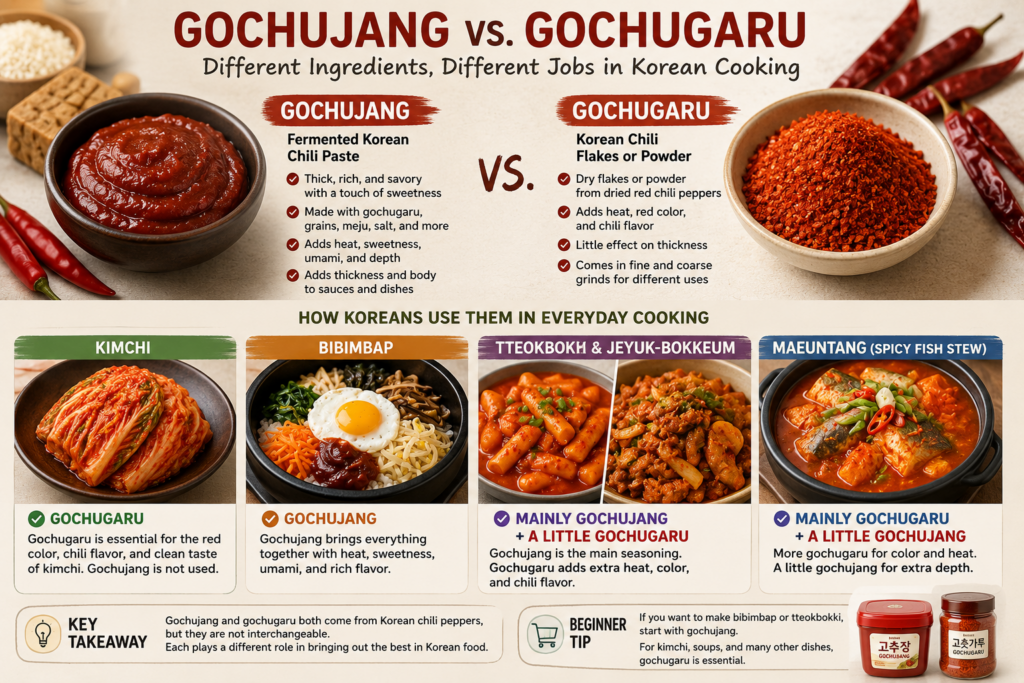
Gochugaru is made by grinding dried red chili peppers. Gochujang is a thick fermented paste made with gochugaru, grains, soybean-derived fermentation ingredients, salt, and other ingredients. The exact ingredients vary by product and production method.
Adding gochujang changes sweetness, saltiness, fermented flavor, and thickness as well as heat. Because it affects a dish differently from gochugaru, the two are difficult to swap in equal amounts.
In our home, we use gochugaru for kimchi and yangnyeom gochujang, a sauce made by adding seasonings to gochujang, for bibimbap. We use both ingredients in some dishes, but which one plays the larger role depends on what we are making.
Look at Saltiness and Thickness, Not Just Heat
Gochugaru adds chili flavor, aroma, red color, and heat. Plain gochugaru contains no added salt or sugar. When cooking with it, you can adjust the saltiness and sweetness separately with soy sauce, salt, sweeteners, or other ingredients.
Gochujang already contains several flavors. Stirring it into broth adds sweetness and saltiness along with chili heat, and larger amounts can make the broth thicker. If a soup is already seasoned to your liking, adding more gochujang just to deepen its red color may make it sweeter or saltier than you intended.
| What to Compare | Gochujang | Gochugaru |
|---|---|---|
| Form | Thick paste | Ground dried chili peppers, ranging from flakes to fine powder |
| How it is made | Several ingredients are combined and fermented. | Dried chili peppers are ground; gochugaru itself is not a fermented paste. |
| Flavor contribution | Heat, sweetness, saltiness, umami, and fermented flavor | Chili heat, aroma, and flavor |
| Effect on texture | Can thicken sauces and broths | May leave visible particles but does not reproduce the body of gochujang |
| Relationship with other seasonings | Its existing sweetness and saltiness need to be considered. | Saltiness and sweetness are easier to adjust separately. |
Large amounts of gochugaru can also change the texture of a broth or sauce. It simply does not add flavor and thickness in the same way as gochujang. My guide to gochujang covers its flavor and what to consider when choosing a product.
We Use Gochugaru for Kimchi and Seasoned Gochujang for Bibimbap
Gochugaru is used in the seasoning for red napa cabbage kimchi. We do not add gochujang when making kimchi at home. The gochugaru combines with garlic, salted fermented seafood, and other ingredients to give the seasoning its color and flavor.
Replacing it with gochujang would introduce the paste’s sweetness, saltiness, and thick texture. The seasoning could still be red, but it would be different from the kimchi seasoning we intended to make. My guide to kimchi explains how kimchi varieties and fermentation affect flavor.
Bibimbap shows the role of gochujang instead. We use yangnyeom gochujang, made by adding other seasonings to the paste, and do not sprinkle in gochugaru separately. The gochujang’s seasoning and flavor mix through the rice and namul, or seasoned vegetables.
Gochugaru alone could add chili flavor and heat, but it would not produce the same result as our seasoned gochujang sauce. I prefer to use enough sauce to season the rice without covering up the flavors of the namul. Here, too, I consider the overall seasoning rather than heat alone.
We Use Both in Tteokbokki and Jeyuk-Bokkeum
At home, we use gochujang as the main chili seasoning for tteokbokki and jeyuk-bokkeum, or spicy stir-fried pork, and add a smaller amount of gochugaru. Gochujang provides the basic flavor and body of the sauce, while gochugaru adds more chili flavor and heat.
Using gochujang does not mean that soy sauce or sweeteners are unnecessary. We adjust the whole seasoning according to the other ingredients and the amount of broth. The two chili ingredients are part of that mixture.
If a sauce already has enough sweetness and saltiness but you want more chili flavor, adding gochujang and adding gochugaru are different choices. More gochujang changes those other flavors and the thickness too.
This is how we cook these dishes at home. Not every tteokbokki or jeyuk-bokkeum recipe uses the same proportions, and some rely more on gochugaru. Rather than assuming there is one correct combination for a dish, look at the role each ingredient plays in the recipe you are following.
In Maeuntang, We Use More Gochugaru and Just a Little Gochujang
Our maeuntang, a spicy fish soup, contains both ingredients, but the balance is the opposite of our tteokbokki or jeyuk-bokkeum. We rely mainly on gochugaru and add only a little gochujang.
Too much gochujang can make the broth feel thicker and look cloudier. We therefore use gochugaru for the red color and chili flavor, with a small amount of gochujang to complement it. This reflects our preference; some maeuntang recipes use no gochujang at all.
| What We Make at Home | How We Use the Two Ingredients |
|---|---|
| Red napa cabbage kimchi | We use gochugaru and do not add gochujang. |
| Bibimbap | We use a seasoned sauce made with gochujang. |
| Tteokbokki and jeyuk-bokkeum | We use mainly gochujang, with a little gochugaru. |
| Maeuntang | We use mainly gochugaru, with a little gochujang. |
The proportions change because we want different flavors and textures in each dish. Along with how spicy you want the food to be, consider whether the seasoning will coat the ingredients or be mixed into a broth. This helps explain why the balance changes.
Substituting One for the Other Means Rebalancing the Seasoning
Replacing a spoonful of gochujang with a spoonful of gochugaru will not give you the same result. You lose the sweetness, saltiness, fermented flavor, and thickness the gochujang would have provided. Gochugaru also varies in heat by product, so an equal amount is not a reliable swap.
Going the other way introduces sweetness and saltiness that the gochugaru would not have added. These changes can be especially noticeable in kimchi seasoning or a relatively light broth.
Mixing gochugaru with water to make a paste does not turn it into gochujang either. You may create a similar appearance, but not the flavor that comes from gochujang’s other ingredients and fermentation.
If you are missing one ingredient, finding a recipe designed without it is often easier when you are learning to cook. If you adapt a recipe yourself, consider saltiness, sweetness, liquid, and thickness as well as heat. There is no single substitution ratio that works for every dish.
The habit of sprinkling a little gochugaru on jajangmyeon, noodles in black bean sauce, illustrates the distinction too. Gochugaru can add chili flavor, while gochujang would change the sauce’s flavor and texture more substantially. Personally, I eat jajangmyeon as it is, without adding gochugaru.
Start With the Ingredients Your Planned Dish Needs
If you want to make a gochujang-based sauce for bibimbap, start with gochujang. For red napa cabbage kimchi, you need gochugaru. For tteokbokki or jeyuk-bokkeum, check whether your chosen recipe calls for both.
Gochugaru also comes in fine and coarse forms. We use coarse gochugaru for much of our everyday cooking, while sometimes choosing fine gochugaru for musaengchae, yukgaejang, or bibim-naengmyeon sauce. These are seasoned shredded radish, spicy beef soup, and a sauce for mixed cold noodles. My guide to fine and coarse gochugaru explains how grind size affects the choice.
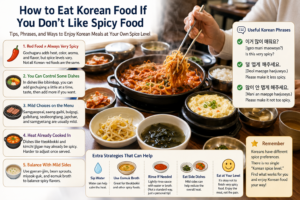
Neither gochujang nor gochugaru is always hotter than the other. The peppers, product, and amount used all matter. Fine gochugaru is not necessarily hotter than coarse gochugaru either. For practical ways to manage heat during a meal, see how to enjoy Korean food if you don’t like spicy food.
We use both ingredients regularly at home, without relying overwhelmingly on either one, but we do not keep them as substitutes for each other. Each has a role in kimchi, bibimbap, stir-fries, and soups. When reading a recipe, distinguish between the two and consider how each will change the dish’s seasoning and texture.