How Spicy Is Korean Food Really?
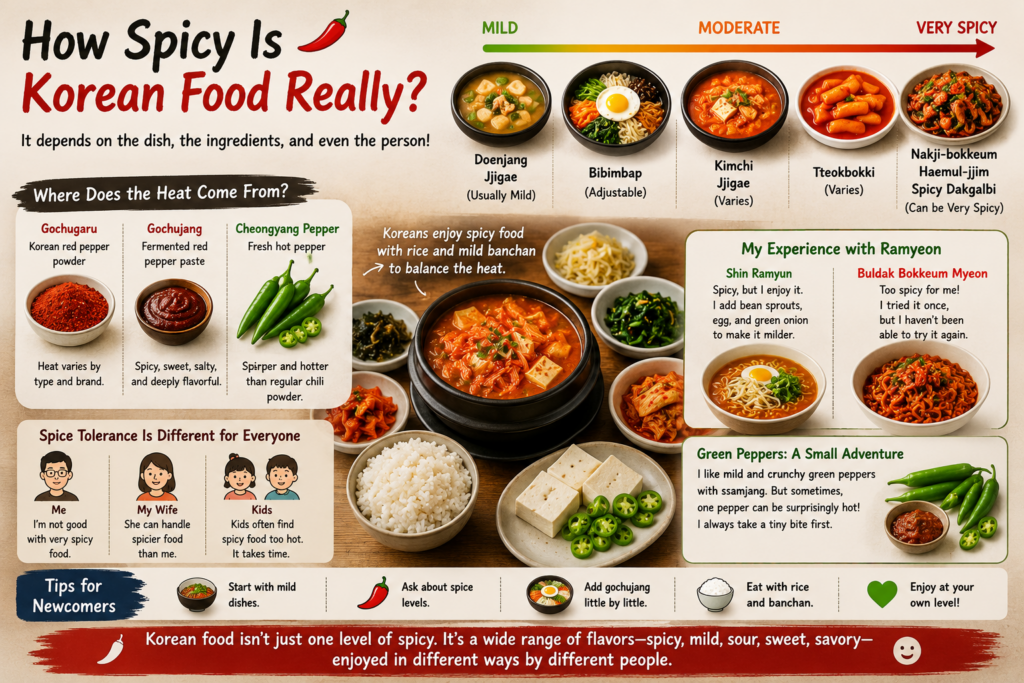
Learn why Korean food varies in heat, why red does not always mean spicy, and how ingredients, cooking styles, and personal taste shape the experience.
I Am Korean, but Very Spicy Food Is Still Difficult for Me
I sometimes sweat while eating Shin Ramyun, but I still enjoy it. Buldak Bokkeum Myeon was a different experience. I tried it once out of curiosity and found it too spicy to try again. Both are spicy instant noodles, yet one lets me enjoy the flavor while the other leaves me concentrating on getting through the heat.
I have never been particularly good at eating very spicy food, even as a child. My wife handles it better than I do, so we can have different reactions to the same dish. When something feels quite hot to me, she may eat it comfortably.
Korean food has no single level of spiciness, and Korean people do not share one standard for what tastes hot. The peppers and seasonings, how much is added, the way a dish is prepared, and the person eating it all make a difference.
Red Is a Clue About the Seasoning, Not a Spice Rating
When you first see kimchi, tteokbokki, or kimchi jjigae, their red color may make you expect intense heat. Some versions are very spicy, but a deeper red does not necessarily mean a hotter dish.
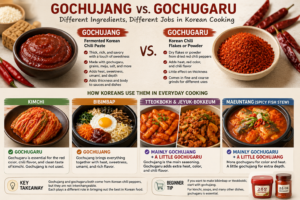
Gochugaru, Korean chili flakes or powder, adds color and chili aroma as well as heat. Its spiciness varies with the peppers used, so equal amounts of different products can give different results. Finely ground gochugaru is not necessarily hotter than coarse flakes, either. Grind size and heat level are separate characteristics. My guide to gochugaru explains its uses and what to look for when choosing it.
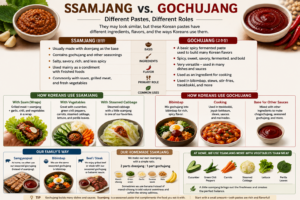
Gochujang also contributes more than heat. Sweetness, saltiness, and fermented flavor come together in the paste, creating several layers of flavor in a dish. A sauce that tastes sweet can still be spicy. I cover its flavor and uses in my guide to gochujang.
The reverse is also true: food does not have to look red to be spicy. Cheongyang peppers can add noticeable heat to doenjang jjigae or a clear soup without changing its color very much. Knowing what went into the dish tells you more than its appearance alone.
Gochugaru, Gochujang, and Fresh Peppers Affect a Dish Differently
Gochugaru mixes into broth or seasoning and spreads its flavor throughout a dish. Gochujang adds a thick texture, sweetness, and saltiness along with heat. Fresh peppers may be added to soup, chopped into sauces, or served alongside the meal.
To me, Cheongyang peppers often produce a sharper, stronger sensation of heat. At home, I cut them into small pieces and add a little at a time. Even a small amount changes the broth, so I prefer to adjust it gradually to a level I enjoy. This describes my experience with the ingredients I normally use, rather than a universal ranking of Cheongyang peppers and gochugaru.
| Source of heat | What to notice in a dish |
|---|---|
| Gochugaru | Heat varies with the peppers used and the amount added. Color and grind size alone are unreliable guides. |
| Gochujang | Sweetness, saltiness, and fermented flavor accompany the heat. The product and amount used affect the result. |
| Fresh hot peppers, including Cheongyang peppers | They can make a soup or stew spicy even when it is not red. Biting directly into a pepper piece can feel more intense. |
“It contains gochujang” does not tell you exactly how spicy something will be. Neither does “the broth is clear” guarantee a mild dish. Both the ingredients and their amounts matter.
The Same Tteokbokki or Stew Can Taste Different From Place to Place
Tteokbokki makes this variation easy to notice. At one shop, you may taste sweetness alongside moderate heat. Somewhere else, the first bite may feel very hot. Enjoying one shop’s tteokbokki does not mean another shop’s version will be equally comfortable to eat. For more about the dish itself, see my guide to tteokbokki.
Kimchi jjigae varies too. The kimchi used as its base has its own level of heat, and households differ in how much extra gochugaru or fresh pepper they add. Sourness and savory broth flavors are part of the experience as well, so a red broth does not mean heat is its only strong flavor.
Think of doenjang jjigae before and after adding Cheongyang pepper. Even with the same soybean paste and tofu, the pepper can change the character of the stew. Preparation matters too: seasoning dispersed in broth and a thick sauce coating the ingredients can deliver different amounts of seasoning in each bite.
I have found some nakji-bokkeum, spicy stir-fried octopus, and haemul-jjim, seafood in a thick spicy sauce, very hot. With the seasoning clinging to the ingredients, even a few bites felt difficult for me. That does not mean nakji-bokkeum is always hotter than kimchi jjigae. A dish’s name offers a clue, but it cannot tell you exactly how that restaurant prepares it.
I Enjoy Shin Ramyun, but Buldak Bokkeum Myeon Was Too Hot for Me
Shin Ramyun is definitely spicy to me. I may sweat while eating it, but I can still enjoy the noodles and broth. At home, I sometimes add soybean sprouts, an egg, and green onions.
The sprouts add texture, and eating the egg with the noodles makes the strong seasoning feel a little gentler to me. These additions help me enjoy my bowl more comfortably. They do not remove the spicy compounds or guarantee that the noodles will taste mild to everyone.
With Buldak Bokkeum Myeon, I was more aware of enduring the heat than enjoying the flavor. After trying it once, I did not return to it. I am describing the product I ate at the time, rather than comparing every variety in the Buldak range.
Someone who enjoys intense heat may happily eat the noodles I found overwhelming. Meanwhile, the Shin Ramyun I find manageable may be too spicy for someone else. Another person’s “It’s not that spicy” can be quite different from the level of heat you actually enjoy.
A Crisp Green Pepper Can Come With an Unexpected Kick
When I dip a fresh green pepper into a Korean paste or sauce, I am usually looking for a crisp, fairly mild bite. Yet peppers that look similar can taste surprisingly different. One may be comfortable to eat, while the next catches me off guard with its heat.
If I take a large bite of a very hot one, the burning sensation can linger. That is why I start with a tiny taste of each pepper before deciding whether to keep eating it. A small taste cannot predict the heat throughout the entire pepper, but it helps me avoid eating a large amount at once.
Seeing a Korean person eat a raw pepper does not necessarily mean they enjoy extreme heat. They may be hoping for the same mild crunch that I like.
A Spicy Dish Feels Different as Part of a Whole Meal
For me, eating spicy jeyuk-bokkeum, or stir-fried pork, continuously feels different from alternating it with rice, seasoned vegetables, and tofu. After a spicy bite, I might have some rice, then mildly seasoned soybean sprouts or spinach. The flavors and textures change as I eat.
This does not remove the heat from the spicy dish. It simply lets me eat other foods between bites of strong seasoning and find a pace and combination that feels comfortable. That is why tasting a spicy dish on its own can leave a different impression from eating it as part of a meal with several foods.
Although I struggle with very spicy dishes, I enjoy the peppery kick of a little chili in a stew and the spicy flavor of ramyeon. What matters to me is whether I can enjoy the food, rather than how much heat I can withstand.
For help choosing dishes or asking a restaurant to adjust the seasoning, see how to eat Korean food if you do not like spicy food. To understand how spicy Korean food really is, look beyond color or one famously hot noodle product. Consider the ingredients, the way the food is prepared, and your own experience of eating it.