Ssamjang Explained: The Sauce Koreans Eat With BBQ
Discover how Koreans eat ssamjang with BBQ, fresh vegetables, and steamed cabbage, plus how we make it at home with banana and nuts.
At Home, We Also Eat Ssamjang with Steamed Cabbage
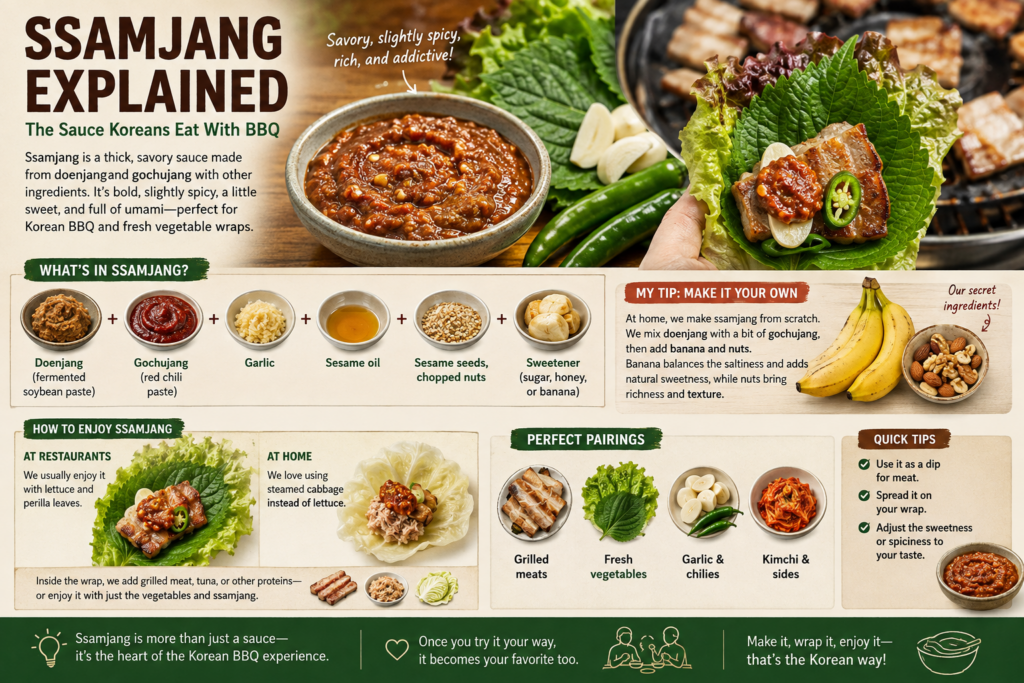
Many people first encounter ssamjang at a Korean BBQ restaurant. Beside the lettuce, perilla leaves, and garlic, there is a small dish of thick brown or reddish-brown paste. That is ssamjang: a condiment you can dip grilled meat into or add to a leafy wrap, called ssam.
At restaurants, we eat it with meat wrapped in lettuce or perilla leaves. At home, we also make wraps with steamed cabbage. We might add meat or tuna and a little ssamjang, or simply eat the cabbage with ssamjang and no other filling.
Ssamjang adds saltiness and savory flavor to vegetables as well as meat. Looking at what you eat it with, and how much you add, reveals more about its uses than that small dish at a BBQ restaurant alone.
It Combines Doenjang, Gochujang, and Other Seasonings
Ssamjang is usually made with doenjang, Korean fermented soybean paste, as its base. Gochujang and other seasonings are mixed in. These may include garlic, sesame oil, sesame seeds, and something sweet, with the combination varying by household or product.
Doenjang provides a salty base with fermented soybean flavor. Gochujang and the other ingredients add heat, sweetness, and aroma. The result tastes different from either doenjang or gochujang on its own.
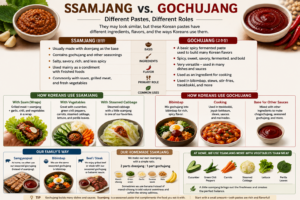
Thinking of ssamjang as simply a milder gochujang can make its uses confusing. It may contain gochujang, but doenjang is an important part of its flavor. Our comparison of ssamjang and gochujang explains how to distinguish them when choosing ingredients for different dishes.
The heat level is not fixed, either. It depends on the proportion of gochujang and any added chili peppers, among other ingredients. You may notice saltiness or fermented soybean flavor before the heat. Try a small amount rather than judging by color alone.
At a BBQ Restaurant, Add a Little to Cooked Meat
When ssamjang arrives at your BBQ table, it is generally there to accompany the meat after grilling. You do not need to spread it over the raw meat or keep brushing it on while the meat cooks.
Try a piece of cooked meat on its own first. Then taste another with a little ssamjang to notice what it adds. With unmarinated meat, it is especially easy to compare the change in seasoning and aroma.
To make a ssam, place meat on a lettuce or perilla leaf and add a little ssamjang. You can include rice or garlic, but there is no need to fit everything on the table into one wrap. Keep it small enough to eat comfortably in one bite so you can taste the meat, vegetables, and seasoning together.
The amount of ssamjang you need depends on the size of the meat and vegetables and whether other seasonings are already present. Start with a small dab on part of the meat instead of covering the whole piece. Meat that is already marinated may taste too salty with extra ssamjang.
Use enough that you can still distinguish the flavors of the meat and vegetables. Adjust the amount in your next wrap. Each one can be a little different.
We Sometimes Add Banana and Nuts to Our Homemade Ssamjang
At home, we make ssamjang by mixing doenjang and gochujang. We start with roughly two parts doenjang to one part gochujang, then adjust according to how the pastes taste. This is our starting point, not a fixed ratio for every ssamjang.
We add ingredients such as green onion, garlic, and sesame seeds. For sweetness, we sometimes use maesil-cheong, a Korean green plum syrup, or banana. We also add nuts on occasion. Banana and nuts are additions we enjoy in our kitchen, rather than standard ingredients used in every Korean home.
Banana blends softly into the paste and adds sweetness. To our taste, it makes the strong saltiness of doenjang feel gentler. Nuts add nuttiness and a little bite. These ingredients change both the flavor and the texture of the mixture.
| Ingredients We Use at Home | What They Add |
|---|---|
| Doenjang | A salty base with fermented soybean flavor |
| Gochujang | Heat, sweetness, and color |
| Green onion and garlic | Fresh aroma and a sharp bite |
| Maesil-cheong or banana | Sweetness to help balance the overall flavor |
| Sesame seeds and nuts | Nuttiness and texture |
Making ssamjang yourself lets you adjust it to the food you plan to serve. Start by tasting the doenjang and gochujang together, then add other ingredients a little at a time.
If you add sesame oil, it helps to think of adjusting the seasoning and adding aroma as separate tasks. Our sesame oil guide explains its aroma and how we decide how much to use.
Fresh Vegetables and Steamed Cabbage Offer Different Bites
You can dip fresh vegetables such as cucumber or green chili peppers into a little ssamjang. Their crispness contrasts with the thick paste. Start by dipping just the tip of the vegetable. A green chili pepper can be hot on its own, so the ssamjang is not the only source of heat to consider.
Steamed cabbage offers a different experience. Its leaves are soft, with a gentle sweetness as you chew, and that changes how they taste alongside salty ssamjang. At home, we sometimes add meat or tuna, and sometimes simply fold the cabbage around a little paste.
Meat or tuna contributes its own flavor and texture. With just cabbage and ssamjang, you notice the sweetness of the cabbage and the seasoning of the paste more directly. This is why the same ssamjang may call for different amounts depending on what you eat it with.
Wraps at home do not have to follow the same combination as lettuce wraps at a BBQ restaurant. You can use the vegetables and foods already on your table. Our article on what Koreans really eat at home shares more about how we put together everyday meals.
When Buying Ssamjang, Check the Name and Ingredients
You do not have to make it yourself. If you are new to ssamjang, a ready-made product lets you explore its flavor and find foods you enjoy with it. Look for “Ssamjang” or “쌈장” on the label instead of relying on the color or shape of the container.
Sweetness, saltiness, heat, and texture vary between products. Trying one does not tell you how every ssamjang will taste. If you will not use it often, a small container is a reasonable place to start.
Check each product’s ingredients and allergen information. At a restaurant or in someone’s home, you can ask what went into the mixture. Some versions contain nuts, as ours sometimes does, so appearance alone cannot tell you everything.
Follow the package instructions for storage before and after opening. Use a clean utensil to take out what you need, then close the lid. Homemade ssamjang mixed with fresh ingredients such as banana or green onion should not be treated as though it will keep under the same conditions as the original doenjang or gochujang. Prepare an amount for upcoming meals rather than making a large batch to keep for a long time.
For your first taste, add a little ssamjang to cooked meat or vegetables. Then try it in lettuce or steamed cabbage. Notice both the paste itself and how it changes the food you eat alongside it. That will help you find the amount you enjoy.