Ganjang for Beginners: Which Korean Soy Sauce Should You Use?
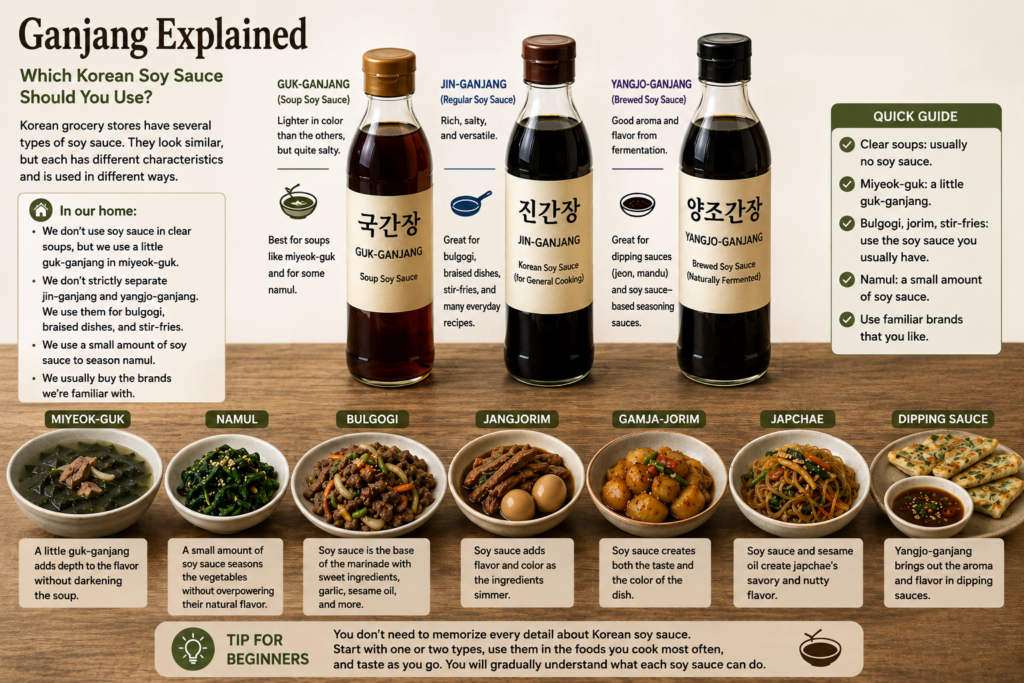
Learn how we use guk-ganjang, jin-ganjang, and yangjo-ganjang at home, and choose Korean soy sauce for soups, bulgogi, braises, and vegetables.
At Home, We Do Not Strictly Separate Jin-Ganjang and Yangjo-Ganjang
In a Korean grocery store, you may find guk-ganjang, jin-ganjang, and yangjo-ganjang lined up on the same shelf. If you are new to Korean cooking, you might wonder whether you need a different bottle for every dish.
At home, we use jin-ganjang and yangjo-ganjang for bulgogi, braised dishes, and stir-fries without making a strict distinction between them. We tend to choose a familiar product rather than compare every ingredient list each time we buy soy sauce.
That does not mean all soy sauces taste the same. Guk-ganjang, in particular, can change the seasoning of a dish if you substitute it in equal amounts for the soy sauce you usually use in bulgogi. Instead of buying all three types at once, start by getting to know the flavor and strength of one soy sauce suited to the dishes you want to make.
Ganjang Adds Aroma and Color Along with Saltiness
Ganjang, the Korean word for soy sauce, is a basic seasoning in Korean cooking. Like salt, it makes food salty, but it also adds umami, aroma, and a brown color. Matching the saltiness with salt alone will not recreate the flavor of a soy sauce seasoning.
A soy sauce-based marinade for bulgogi is a useful example. Soy sauce combines with sweet ingredients, garlic, sesame oil, and other seasonings to flavor the meat. In braised dishes, it also affects the color of the ingredients and cooking liquid.
Its role differs from those of gochujang and doenjang. Gochujang is a thick paste that brings heat, sweetness, and saltiness, while doenjang has a pronounced savory soybean flavor and fermented aroma. Liquid soy sauce mixes easily into broth and sauces, but remember that its color and aroma become part of the dish too.
The Three Names Are a Starting Point for Understanding Their Uses
Guk-ganjang, jin-ganjang, and yangjo-ganjang are common names on Korean grocery shelves. The name alone, however, cannot tell you the exact saltiness or flavor of every product. This table offers a starting point for choosing one.
| Type | Basic characteristics | Useful applications | What to keep in mind |
|---|---|---|---|
| Guk-ganjang | Generally lighter in color and relatively salty. | Soups and some seasoned vegetable dishes. | A lighter color does not mean you should use more. |
| Jin-ganjang | Widely used in braises, stir-fries, and meat marinades. | Bulgogi, jangjorim, braised potatoes, and stir-fries. | Sweetness, saltiness, and color vary by product. |
| Yangjo-ganjang | Brewed through fermentation and also used where its aroma and flavor can stand out. | Dipping sauces, vegetable dressings, bulgogi, and stir-fries. | It can be used in cooked dishes too. |
The shorthand “jin-ganjang for cooking, yangjo-ganjang for dipping” can help you choose, but it is not a strict rule. You can make bulgogi or stir-fries with yangjo-ganjang. Manufacturer guidance also describes both types as suitable for a variety of dishes.
Even if you do not separate the two strictly, as we do not in our home, check the flavor when switching products before assuming that your usual amount will work.
Soup Soy Sauce Does Not Go into Every Soup
At home, we do not add soy sauce to clear soups. We do, however, use a little guk-ganjang in miyeok-guk, Korean seaweed soup. The name “soup soy sauce” does not mean it belongs in every pot of soup.
Guk-ganjang can add saltiness and umami to broth. Its relatively light color does not mean its seasoning is weak. Judge the amount by the taste of the soup rather than its appearance.
Taste a spoonful of broth, then adjust gradually if it needs more seasoning. If the stock or other ingredients already contribute salt, you may need less guk-ganjang. There is no reason to add more simply because a properly seasoned soup still looks pale.
Using jin-ganjang or yangjo-ganjang in soup can change its color, sweetness, and aroma, depending on the product and amount. If you do not have guk-ganjang, consider whether those changes suit the soup you are making before substituting an equal quantity.
Bulgogi and Braised Dishes Need Different Seasoning Checks
In bulgogi, soy sauce works with other seasonings to flavor the meat. Adding more does not automatically create a deeper flavor; it also changes the balance with sweet ingredients, garlic, and sesame oil.
For your first attempt, use a recipe matched to the quantity of meat you have. If you switch soy sauces, check the cooked meat and use that experience to adjust your next batch. Cook a small piece thoroughly to taste it rather than sampling marinade that has touched raw meat. Our guide to bulgogi explains the dish and how it is eaten.
For jorim, or Korean braised dishes, account for the reduction of the cooking liquid. A broth that tastes well seasoned at the beginning can become salty as water evaporates. That is why seasoning braised potatoes or jangjorim to their final intensity at the start can leave the finished dish too strongly seasoned.
Check the seasoning with the amount of liquid you intend to leave at the end in mind. Tasting a piece of the main ingredient with the sauce gives you a better idea of how the dish will taste at the table than tasting the liquid alone.
A Little Soy Sauce Can Change the Flavor of Namul
We also use a little soy sauce when making namul, Korean seasoned vegetables. Because the seasoning coats the vegetables directly, using it as generously as you might in a soup can make the dish too salty.
Add a small amount, mix evenly, and taste it with the vegetables. Account for any seasoning already present. Notice whether you can still appreciate the vegetables’ own aroma and texture alongside the soy sauce.
Not every namul is seasoned with soy sauce. We use doenjang for spinach namul at home, for example. Comparing that preparation with the uses in our guide to doenjang shows why namul does not have one fixed seasoning.
Even the same vegetable tastes different depending on the jang you use. Vegetables dressed with soy sauce and those dressed with doenjang do not need the same seasoning proportions.
Choose Your First Bottle for the Foods You Plan to Cook Often
If you want to start with bulgogi, braises, and stir-fries, choose one jin-ganjang or yangjo-ganjang labeled for those uses. You can add guk-ganjang later if you frequently make soups or vegetable dishes that call for it.
At home, we tend to buy a familiar product from a brand we already use. With a soy sauce we have used for a long time, it is easier to judge how much to add and what flavor to expect. That is our shopping habit, not a claim that one brand is best for everyone.
For a first purchase, read the product name and suggested uses. Check whether it is plain soy sauce or a seasoned product, such as mat-ganjang or a prepared braising sauce, with added sweetness or other ingredients. Using an already seasoned sauce while adding every other seasoning in a recipe can produce a different result than intended.
If you need to avoid particular ingredients, check the ingredient list and allergen information. Follow the product’s storage directions before and after opening. When cooking Korean food with soy sauce from another country, do not assume the saltiness, sweetness, and color will be identical either.
Once you choose a bottle, try it in one familiar dish. Getting to know its flavor, rather than frequently changing products, makes it easier to judge the amount you need next time. Our guide to essential Korean ingredients covers the other basics you can keep alongside it.