Samgyeopsal: Why Koreans Love Grilling Pork Belly Together
Explore samgyeopsal through our Korean dining experiences, from pork belly thickness and fat to leafy wraps, grilled kimchi, and sharing the grill.
Samgyeopsal Reminds Me of Company Dinners in Korea
When I think back to company dinners I attended in Korea, samgyeopsal was a familiar choice. We sat around a grill, cooked the pork, and talked as we ate. Unlike a meal that arrives fully prepared, this one continued while the next batch of meat was cooking.
At those dinners, I sometimes saw younger or more junior coworkers take responsibility for grilling. That should not be understood as a rule for every Korean meal. Some restaurants have staff who cook the meat, while at other tables people share the job.
Those scenes are part of what samgyeopsal means to me. Yet even people sharing the same grill can enjoy the meat differently. One person might use a little salt, while another adds kimchi and leafy vegetables. The experience changes not only with how the pork is grilled, but also with what you eat alongside it.
Samgyeopsal Is Pork Belly, but It Is Not Bacon
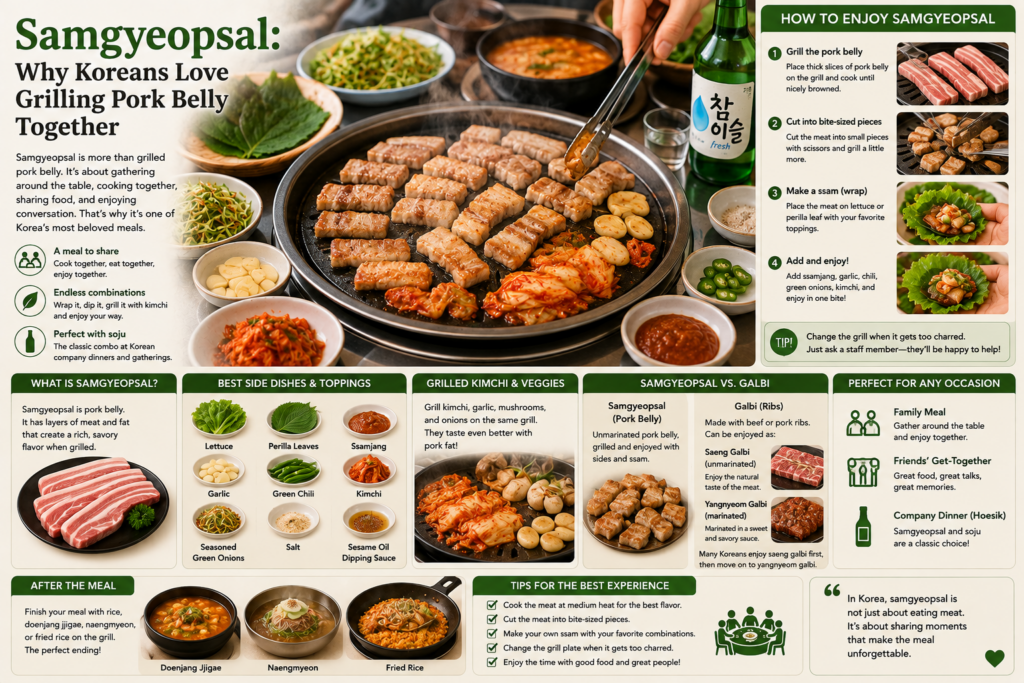
Samgyeopsal is a cut from the pig’s belly, with visible layers of meat and fat. Its English name is pork belly. The Korean name refers to those layers, although every piece does not have an identical pattern.
Bacon can also come from pork belly, so the appearance may seem familiar. However, the pork commonly used for samgyeopsal is not cured or smoked like bacon. If you expect bacon’s saltiness or smoky flavor, grilled samgyeopsal will taste quite different.
The familiar version is grilled without a strong marinade. Salt, ssamjang, and side dishes are added as you eat. Seasoned versions also exist, so check the menu if you want to know whether the pork has been marinated.
The most basic difference between samgyeopsal and galbi is the cut. Samgyeopsal is pork belly, while galbi refers to beef or pork ribs. Galbi can also be served without a marinade, so describing one as plain and the other as marinated does not tell the whole story.
I Prefer Moderately Thick Slices
The thickness of samgyeopsal changes both the cooking process and the eating experience. I prefer slices somewhere in the middle: neither extremely thick nor very thin.
Very thick pork takes longer to cook and requires some skill to get right all the way through. Of course, some restaurants do an excellent job with thick cuts. But when I am grilling the meat myself, a moderate thickness feels more manageable.
Very thin slices cook almost immediately. I may enjoy the first few pieces, but as the meal continues, I find that they dry out and lose their juiciness quickly on the grill. Having to keep eating as soon as each piece is ready becomes a little inconvenient for me.
My preferred thickness gives me a satisfying bite while making it easier to keep cooking and eating at a comfortable pace. The best choice can depend on who is grilling and what texture you enjoy.
I like my pork thoroughly cooked. Once a piece is ready, though, I try not to leave it over strong heat until it dries out or burns. Keeping finished pieces separate from those that need more cooking makes the meal easier to manage.
I Look for a Balance of Meat and Fat
Fat is part of samgyeopsal, and it contributes much of the rich flavor when the pork is grilled. Still, I find it difficult to eat much when the pieces are excessively fatty. Among the available cuts of pork belly, I prefer pieces with relatively less fat and a good portion of meat.
I also enjoy hangjeongsal, another Korean pork cut, either alongside samgyeopsal or on its own. What I particularly like is its pleasantly chewy texture. Alternating between the two gives me a different bite during the meal.
For me, choosing meat goes beyond the name of the cut. Even when ordering samgyeopsal, I pay attention to the thickness and the balance of meat and fat in the actual pieces. Those differences can affect how much I enjoy the meal.
I Vary the Wraps, Sauces, and Kimchi
I eat samgyeopsal with leafy wraps, sauces, and kimchi, but I do not have one fixed combination. Sometimes I make a wrap; other times I simply add a little sauce or eat the meat with kimchi.
If you are trying samgyeopsal for the first time, taste a cooked piece on its own or with just a little salt. Then try another with ssamjang or kimchi. This makes it easier to notice how the accompaniments change the flavor of the same pork.
Lettuce adds a mild, fresh taste, while perilla leaves have a more distinctive aroma. Ssamjang adds a savory, salty flavor, and kimchi brings tanginess and seasoning. You can vary these a little at a time instead of putting everything into every bite.
To make a ssam, place some meat and a small amount of your chosen accompaniments on a leaf. Keep the wrap small enough to eat comfortably in one bite. You do not have to wrap every piece; eating the meat separately and alternating it with side dishes is fine too.
For more detail, see our guide to ssamjang and how to make Korean ssam with lettuce and perilla leaves.
Grilled Kimchi Offers a Different Flavor
At samgyeopsal restaurants, kimchi may be eaten as a side dish or placed on the grill. When it cooks in some of the rendered pork fat, it becomes softer and takes on a richer flavor. The same kimchi feels like a different accompaniment once it has cooked beside the meat.
Garlic, mushrooms, and onions may also be grilled. However, grill designs and heat levels vary, so not every part of the grill is suitable for every ingredient. If the staff are cooking for you, follow their guidance.
As the meal continues, burnt residue can build up and affect the flavor of newly added meat. At restaurants with replaceable grill plates, you can ask the staff to change the plate. You do not need to handle the hot grill yourself.
For the wider process, from ordering to grilling and finishing the meal, see our guide to eating Korean BBQ for the first time.
Rice or Noodles Can Be Part of the Meal Too
Some diners order naengmyeon, or cold noodles, after samgyeopsal. Others have doenjang jjigae with rice. Certain restaurants also offer fried rice prepared on the grill. You can finish after the meat or eat rice alongside it from the beginning.
If you would like to end with a warm stew and rice, doenjang jjigae is one option. Our guide to doenjang jjigae explains its flavor and how we eat it. Available dishes and additional charges vary by restaurant.
Samgyeopsal is often associated with soju, but alcohol is not required to enjoy the meal. Whether you are with coworkers, family, or friends, there is room to choose the accompaniments you like.
Start by tasting the pork itself, then try it with salt, ssamjang, or kimchi. Notice how the thickness, texture after grilling, and accompaniments affect each bite. Finding the combinations you enjoy is part of getting to know samgyeopsal.