Ssamjang vs. Gochujang: What Is the Difference?
Compare ssamjang and gochujang by flavor and use, with examples from our table and tips on choosing a paste or substituting one for the other.
Ssamjang Can Contain Gochujang, but the Two Taste Different
If you visit a Korean grocery store looking for the ssamjang you enjoyed at a BBQ restaurant, it is easy to confuse it with gochujang. Both are thick pastes, and ssamjang can contain gochujang, so they may seem interchangeable.
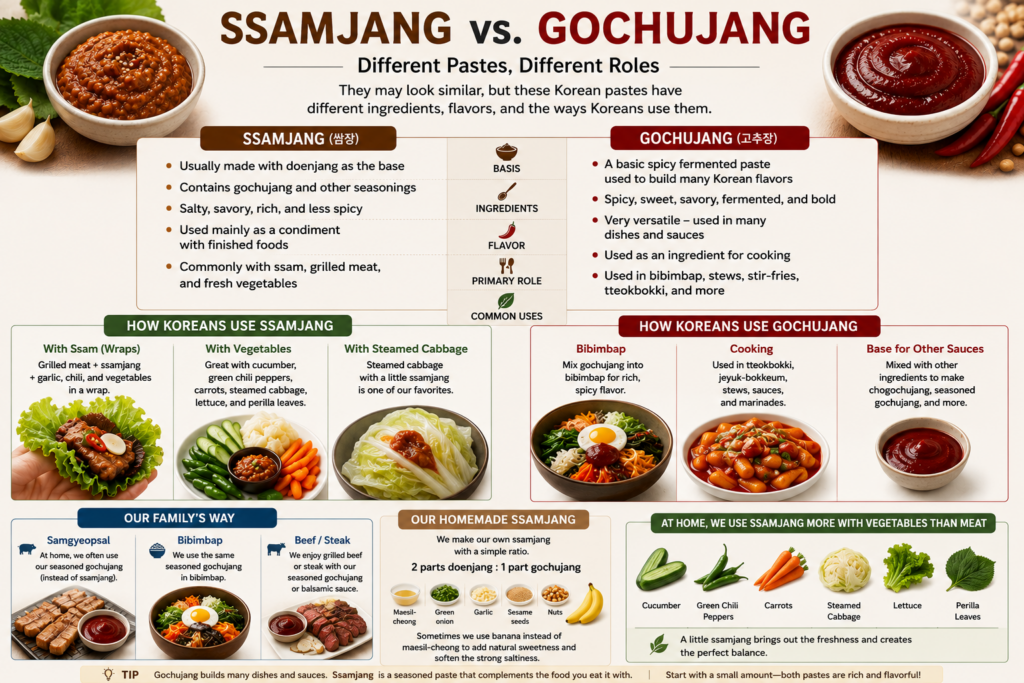
Gochujang is a fermented paste made with ground red chili peppers, grains, soybean-derived fermentation ingredients, salt, and other ingredients. Ssamjang is usually made by combining doenjang, or fermented soybean paste, with gochujang and seasonings such as garlic and sesame oil. Ingredients and proportions vary by household and product.
Gochujang is widely used as a base for cooking and making sauces, while ssamjang is commonly served as a condiment with meat and vegetables. However, gochujang can also become a dipping sauce, and ssamjang can be used in cooking. Whether a paste is cooked does not fully distinguish the two.
At home, we often serve ssamjang with vegetables, while sometimes choosing our homemade seasoned gochujang for samgyeopsal, or pork belly. We choose according to what we are eating.
Look for the Flavor of Doenjang, Not Just the Heat
Gochujang combines chili heat with sweetness, saltiness, and fermented flavor. Adding it to food changes the overall seasoning and thickness as well as the heat. My guide to gochujang explains its flavor and uses in more detail.
In ssamjang, the salty, savory fermented flavor of doenjang plays an important role. Gochujang and the other seasonings add heat, sweetness, garlic aroma, and nuttiness. Even if a ssamjang tastes less spicy than gochujang, thinking of it simply as mild gochujang misses this difference.
| What to Compare | Ssamjang | Gochujang |
|---|---|---|
| Basic ingredients | Usually doenjang mixed with gochujang and other seasonings | Made with ground red chili peppers, grains, fermentation ingredients, salt, and other ingredients |
| Flavor | The savory flavor and saltiness of doenjang combined with other seasonings | Heat, sweetness, saltiness, and fermented flavor |
| Common uses | Served in small amounts with cooked meat, fresh vegetables, and leafy wraps called ssam | Used in bibimbap sauces and seasonings for dishes such as tteokbokki and jeyuk-bokkeum |
The heat of ssamjang depends on the proportion of gochujang and ingredients such as added chili peppers. Gochujang also varies in heat by product. Instead of assuming that ssamjang is always mild or gochujang is always hotter, check the label and taste a small amount.
Our Seasoned Gochujang Is Different From Our Ssamjang
What we call yangnyeom gochujang, or seasoned gochujang, at home is a mixture of gochujang, maesil-cheong (Korean plum syrup), sesame oil, and a small amount of makgeolli (Korean rice wine). We prepare it ahead of time for later use. Its ingredients differ from our doenjang-based ssamjang.
When eating samgyeopsal, we lightly dip the meat into this seasoned gochujang or add a little to a ssam. I usually use about half a teaspoon or less in one wrap. Too much makes the seasoning more noticeable than the meat and vegetables. This is my preference; the amount depends on the size of the wrap and how strongly seasoned the sauce is.
We use the same seasoned gochujang in bibimbap. We start with a little, mix it through, and taste before adding more. Since the gochujang has additional seasonings, we consider sweetness and saltiness too.
We also serve seasoned gochujang with grilled beef or steak, or choose a balsamic sauce instead. These are our family’s preferences. They show how gochujang can be mixed with other ingredients to make a condiment for the table.
We Use Ssamjang With Vegetables and Sometimes Skip Extra Sauce on Marinated Meat
At home, we use ssamjang more often with vegetables than with meat. We dip the ends of fresh cucumber or carrot pieces into a little paste. We also enjoy the combination of soft, gently sweet steamed cabbage and salty ssamjang.
We make ssamjang with roughly two parts doenjang to one part gochujang, adding green onion, garlic, sesame seeds, and other ingredients. Sometimes we use banana instead of maesil-cheong or add nuts. This is our way of adjusting it to our taste and the vegetables we eat, rather than a standard method for every household. My guide to homemade ssamjang explains how we adjust the ingredients.
When eating marinated galbi, however, we usually skip ssamjang. The meat already has sweet and salty seasoning, and adding another paste makes it taste too heavily seasoned to me.
Even when a BBQ restaurant serves ssamjang, you do not have to put it on every piece of meat. It adds seasoning to unmarinated meat, but you may not need it when the meat is already well seasoned. For the steps from ordering to making a wrap, see how to eat Korean BBQ for the first time.
Choosing a Different Dip Is Different From Replacing an Ingredient in a Recipe
| How You Use One in Place of the Other | How the Flavor Changes |
|---|---|
| Using ssamjang instead of gochujang | The doenjang and other seasonings in ssamjang change the flavor of the dish. |
| Serving gochujang instead of ssamjang | You can enjoy gochujang’s sweet chili flavor, but it will not have ssamjang’s distinctive doenjang flavor. |
If you do not have ssamjang, you can serve a little gochujang with meat or vegetables. Use it as it is or add other seasonings to suit your taste. Just do not expect it to taste like the ssamjang you had at a BBQ restaurant.
Likewise, adding ssamjang to bibimbap is a matter of preference. Compared with a gochujang-based sauce, it introduces the flavor of doenjang and the other seasonings already in the ssamjang.
Replacing gochujang with ssamjang in a tteokbokki or jeyuk-bokkeum recipe affects the whole dish. Unlike dipping a single bite into a little paste, you are mixing the seasoning throughout the food. Equal spoonfuls will not provide the same sweetness, saltiness, or aroma.
Being able to eat either paste with a food does not mean that an equal substitution will produce the same flavor. When making a dish for the first time, use the paste specified in the recipe. If you want to cook with ssamjang, it is easier to start with a recipe designed around it.
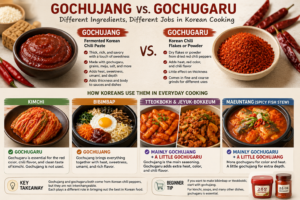
Gochujang and gochugaru are another pair of ingredients that cannot simply be swapped without changing the result. I explain how to distinguish them in gochujang vs. gochugaru.
When Shopping, Check Both the Product Name and What You Plan to Eat
If you need a ready-to-use condiment for grilled meat or vegetables, prepared ssamjang is an option. If you plan to make tteokbokki or jeyuk-bokkeum with gochujang, buy the gochujang called for in your recipe.
When shopping for bibimbap seasoning, check whether the product is plain gochujang or a bibimbap sauce with other ingredients already added. You can season the dish yourself with plain gochujang or use a prepared sauce, but their flavor and consistency will differ.
| Name on the Package | What to Consider |
|---|---|
| 쌈장 · Ssamjang | A condiment for leafy wraps, meat, and vegetables |
| 고추장 · Gochujang | A basic paste for cooking or mixing into other sauces |
| 양념고추장 · Seasoned Gochujang or Bibimbap Sauce | A product with additional ingredients; check its intended use and directions |
Read the product name and ingredients rather than relying on the color or shape of the container. Ssamjang products vary in sweetness, saltiness, and heat, and “seasoned gochujang” does not describe one fixed formula.
Choosing becomes easier when you know whether you want the savory condiment you tasted at a BBQ restaurant or an ingredient for homemade tteokbokki. Choose the paste that suits the food and flavor you have in mind.