Doenjang for Beginners: How Korean Soybean Paste Is Actually Used
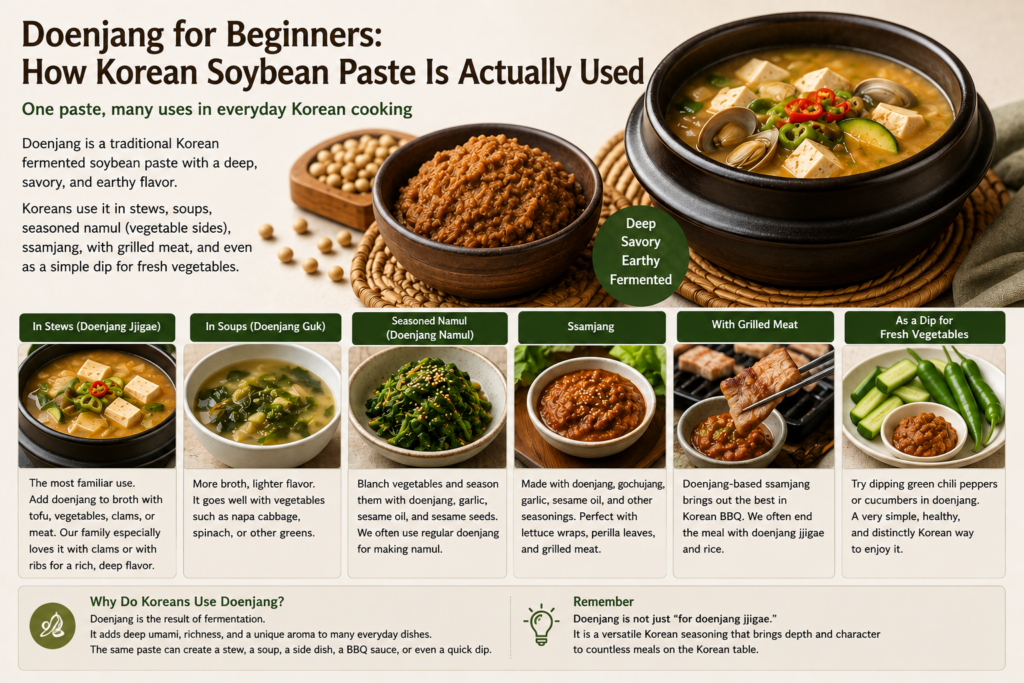
Learn how we use doenjang in stews, spinach namul, and ssamjang, plus what to check when buying Korean soybean paste for the first time.
At Home, We Sometimes Choose Different Doenjang for Stews and Vegetables
If you are new to doenjang, doenjang jjigae may be the first dish that comes to mind. We enjoy that stew at home, but we also use doenjang to season spinach namul and as a base for ssamjang.
These days, we sometimes choose a product intended for stews when making jjigae and use regular doenjang for seasoned vegetables. Similar-looking tubs of brown paste do not necessarily serve the same purpose in our kitchen.
When buying doenjang for the first time, start with the dish you want to make. Whether you plan to cook a pot of stew or season vegetables affects both the product you choose and how much you use.
Doenjang Adds Saltiness, Umami, and a Fermented Aroma
Doenjang is a Korean fermented soybean paste. In a traditional method, cooked soybeans are formed into blocks called meju, fermented and dried, then soaked in brine. The liquid and solids are later separated and further aged to make ganjang, Korean soy sauce, and doenjang. Commercial products vary in their ingredients and production methods.
A small taste of doenjang brings saltiness, a deep savory soybean flavor, and a fermented aroma. The smell may seem strong when you first open the tub, but the paste tastes different once dissolved in broth or eaten with tofu and vegetables.
I remember disliking the smell of meju fermenting in a warm room at home when I was a child. That memory of the fermentation process was quite separate from my enjoyment of doenjang dishes at the table. Our guide to Korean fermented foods explores jang and other fermented staples in more detail.
Unlike gochujang, doenjang is not primarily used to add chili heat. That does not mean every doenjang dish is mild. We add a little Cheongyang chili or jalapeño to our doenjang jjigae. The flavor of the paste and the heat of the finished dish are different things.
It Tastes Different in Broth and on Vegetables
The same doenjang can taste quite different when simmered in broth or mixed directly with vegetables. For a beginner, these different uses are a helpful starting point.
| Dish or use | How doenjang is used | What to check when starting out |
|---|---|---|
| Doenjang jjigae | Dissolved in broth and simmered with tofu, vegetables, and sometimes meat or seafood. | Consider the seasoning already present in the broth and other ingredients. |
| Doenjang guk | Dissolved in a soup with vegetables such as cabbage or spinach. | Taste the broth to check that it is not too salty. |
| Namul seasoned with doenjang | Mixed with prepared vegetables and other seasonings. | Start with a little and taste it together with the vegetables. |
| Ssamjang | Combined with gochujang and seasonings such as garlic and sesame oil. | The finished dip is still concentrated, so serve it in small amounts. |
| A dip for raw vegetables | A little plain doenjang can accompany cucumber or green chili peppers; at home, we usually choose seasoned ssamjang. | Check which paste or dip you are using before deciding how much to add. |
Doenjang guk generally has more broth, while doenjang jjigae tends to have more solid ingredients and a more concentrated flavor. These are tendencies rather than fixed rules; homes and restaurants prepare them differently.
Our doenjang jjigae has plenty of ingredients and relatively little broth. My wife likes tofu, so we add a generous amount, along with shiitake mushrooms and Korean zucchini or regular zucchini. Clams or meat give the broth another layer of flavor. Our doenjang jjigae story describes the stew as part of a meal at home.
We Use Regular Doenjang to Season Spinach Namul
Vegetables dressed with doenjang offer a different experience from soup or stew. The paste coats the vegetables directly, so its saltiness and savory flavor come through with each bite.
At home, spinach namul is one dish we season with regular doenjang. Garlic, sesame oil, and sesame seeds are examples of seasonings that can accompany doenjang in namul, but every vegetable dish does not need the same combination or proportions.
When trying this yourself, mix a small amount of doenjang evenly through the prepared vegetables, then taste. Tasting it with the vegetables gives you a better sense of the final seasoning than tasting the paste alone. If the vegetables are already seasoned, account for that too.
The number of spoonfuls you use in soup will not necessarily work for a bowl of namul. Doenjang diluted in broth and doenjang coating vegetables need to be adjusted separately.
Doenjang, Ssamjang, and Miso Are Different Products
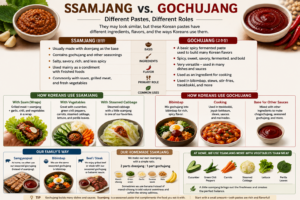
The brown or reddish-brown dip served beside lettuce and meat at a Korean BBQ restaurant is often ssamjang. It is usually made by combining doenjang with gochujang and other seasonings. Doenjang is one of its base ingredients.
At home, we usually eat cucumber and green chili peppers with seasoned ssamjang. This is our usual choice for dipping raw vegetables, even though we use regular doenjang for spinach namul.
If you expect the flavor of ssamjang and take a large dab of plain doenjang instead, it may taste saltier or more strongly fermented than you anticipated. Our guide to ssamjang explains how to use it in a wrap and how much to add.
Japanese miso is also a fermented paste made with soybeans, but it is not the same product as doenjang. Ingredients, production methods, and aging vary, as do the flavors of individual products. Familiarity with miso can provide a starting point for understanding doenjang, but equal quantities will not necessarily produce the same taste.
When making a doenjang dish for the first time, check which paste the recipe calls for. If you substitute another one, reassess the saltiness and aroma as you cook.
Check Whether You Are Buying Plain Paste or a Seasoned Product
At the store, regular doenjang may sit beside stew-specific doenjang, prepared stew seasoning, and ssamjang. Read the product name and directions rather than choosing by the color of the package.
Our choice to use a stew-specific product is simply one approach. Regular doenjang can also be used to make jjigae. Conversely, a product intended for stew may contain additional seasonings, so check its ingredients and flavor before using it on vegetables.
If you follow a vegetarian diet, do not assume that every product is suitable simply because it is described as soybean paste. Read the ingredient list. A finished doenjang soup or stew may also contain anchovy broth, clams, or meat.
Saltiness and aroma vary between products. Start with a little less when using an unfamiliar doenjang, even if you know how much you normally use of another brand. Adding more increases not only umami but also saltiness and fermented flavor. Taste before adding other seasonings as well.
Follow the storage directions on the package before and after opening. Use a clean spoon to take out what you need, then close the lid securely.
Begin with One Dish Made with Doenjang
If the aroma is unfamiliar, try a soup or stew with tofu and vegetables before tasting a large amount straight from the tub. Eating it with rice can help you understand the role doenjang plays in a meal.
If you enjoy it, try vegetables seasoned with doenjang next. Spinach namul is one example from our kitchen. You can also experience doenjang as part of ssamjang with raw vegetables, while remembering that the other ingredients change the flavor.
There is no required order. Notice how the savory flavor you enjoyed in broth comes through differently when it coats vegetables or becomes part of a dip.
The key is to consider the dish you are making, check the strength of your particular product, and adjust the amount by tasting it with the ingredients you will actually eat.