Tteokbokki: Korea’s Iconic Spicy Rice Cakes
Explore tteokbokki through rice and wheat tteok, spice levels, and our home version with plenty of broth, ramyeon, fish cakes, and moderate sweetness.
I Prefer Rice Tteok, While My Wife Prefers Wheat Tteok
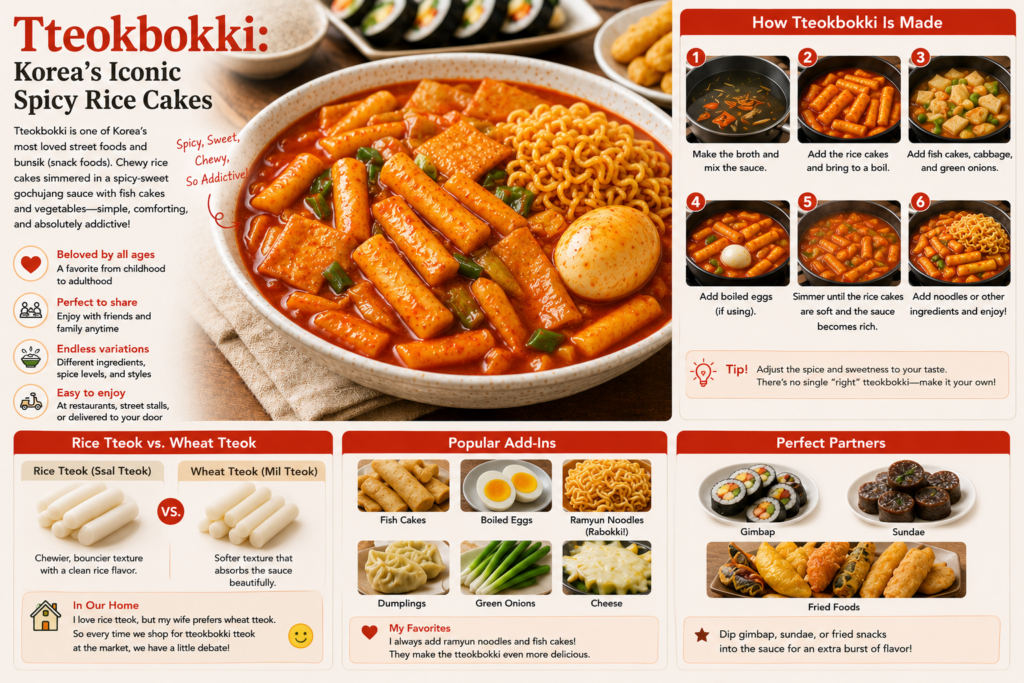
When we shop for tteokbokki ingredients, my wife and I sometimes have a small debate about which tteok to buy. I like the substantial chew of rice tteok, while she prefers the softer texture of wheat tteok. We are planning the same dish, but imagining slightly different bites.
Tteokbokki is often introduced as a spicy Korean dish coated in red sauce. Yet the texture of the tteok matters just as much as the heat. The type of tteok, the balance of sweetness and spice, and additions such as ramyeon noodles or fish cakes all change the experience.
If you are trying tteokbokki for the first time, pay attention to the chew as well as the spice. A different type of tteok or sauce may suit you better than the first version you try.
“Rice Cakes” Can Also Mean Wheat Tteok on the Menu
Tteokbokki is made by cooking tteok in a seasoned sauce. Although its name is associated with stir-frying, the familiar red version is usually simmered with water or broth until the tteok softens and the sauce comes together.
English menus often call it “spicy rice cakes,” but the tteok used in the dish is not always made from rice. Mil-tteok, made primarily from wheat flour, is also widely used.
| Type | Main ingredient | Texture you may notice |
|---|---|---|
| Rice tteok, or ssal-tteok | Rice | Often has a substantial, chewy bite. |
| Wheat tteok, or mil-tteok | Wheat flour | Often feels softer and springy when chewed. |
These are tendencies rather than fixed rules. The blend of ingredients, thickness, storage conditions, and cooking time can all affect the texture. Rice tteok is not always firm, and wheat tteok is not always soft. Our preferences simply reflect the textures we each enjoy.
When buying a package, check whether it contains rice tteok or wheat tteok. Knowing which one you tried makes it easier to choose next time.
We Keep the Heat Manageable and the Sweetness Moderate
I do not handle extremely spicy food very well, so we make our tteokbokki a little less spicy at home. Enjoying tteokbokki does not have to mean enjoying intense heat.
We use gochujang as the main chili seasoning and add a smaller amount of gochugaru. Gochujang contributes sweetness, saltiness, and body along with heat. Gochugaru adds more chili flavor and spice. I explain their different roles in our guide to gochujang and gochugaru.
For sweetness, we use sugar or allulose. We do not make the sauce intensely sweet, but we still like a moderate sweetness that feels right for tteokbokki. Both the heat and sweetness are adjusted to our taste.
A sweet sauce can still be quite spicy, and the depth of its red color does not reliably tell you how hot it will be. When ordering or buying a ready-to-cook package, check the heat level first. One shop’s “regular” may be much hotter than another’s, so it helps to ask if you are unsure.
We Like Plenty of Broth, with Ramyeon and Fish Cakes
Our homemade tteokbokki is on the soupy side, with a fairly generous amount of broth. Tteok, fish cakes, and ramyeon cooking together in that broth are a familiar combination in our kitchen.
I particularly like adding ramyeon noodles. The sauce-coated noodles offer a different texture between bites of chewy tteok. Tteokbokki with ramyeon is commonly called rabokki.
We also add fish cakes, known as eomuk. Tteok, noodles, and fish cakes share the same seasoning but feel different as you eat them. That variety is part of the appeal of a pot of tteokbokki.
If you add ramyeon at home, remember that the noodles absorb liquid as they cook. A pot can become too dry if you keep simmering it without checking. Watch the remaining liquid and the texture of both the noodles and tteok rather than relying only on a timer.
Fish cakes contain fish, and tteokbokki broth may also contain anchovies or other animal ingredients. If you want a vegetarian version, check the fish cakes, broth, and seasonings as well as the visible tteok and vegetables.
I Dip Fried Squid and Gimmari into the Sauce
Tteokbokki can be enjoyed on its own, but it also works well with other casual Korean foods. I like fried squid and gimmari—fried seaweed rolls filled with glass noodles—and dip them into tteokbokki sauce. The sauce softens the parts it touches while other parts remain crisp.
You do not need to mix all the fried food into the tteokbokki. Keeping it separate and dipping each piece lets you decide how much sauce to add.
Gimbap is another familiar companion. People may alternate between bites of gimbap and tteokbokki or lightly dip the gimbap into the sauce. For more about its fillings and the way we eat it at home, see our guide to gimbap.
If you are curious about sundae and other foods served alongside tteokbokki, our Korean street food guide explores those choices in more detail.
Rabokki, Jeukseok Tteokbokki, and Gungjung Tteokbokki Describe Different Things
The words attached to tteokbokki on a menu can help you understand what to expect. However, they do not all describe the same aspect of the dish.
| Name | What it describes | What to expect |
|---|---|---|
| Rabokki | Tteokbokki with ramyeon noodles | Tteok and noodles eaten together. |
| Jeukseok tteokbokki | Tteokbokki cooked at the table | Tteok, vegetables, and other additions simmer as you eat. |
| Gungjung tteokbokki | A soy sauce-based variety | Usually made with beef and vegetables, with a different flavor from red tteokbokki. |
Jeukseok tteokbokki can include ramyeon, so it can overlap with rabokki. One name describes an added ingredient; the other describes how the dish is cooked and served.
Gungjung tteokbokki generally centers on soy sauce rather than the spicy red seasoning associated with gochujang tteokbokki. It is useful to know about this variety if the heat of red tteokbokki does not appeal to you.
Start by Finding the Version You Enjoy
For a first serving, you do not need the hottest sauce or a long list of additions. Check the heat level, then notice how the tteok feels as you chew. Another time, you can try a different type of tteok or add something alongside it.
For me, rice tteok with ramyeon and fish cakes is a familiar combination. My wife still prefers wheat tteok. At home, we keep the broth fairly generous, the heat manageable, and the sweetness moderate.
As you eat, notice the texture of the tteok, the balance of sweet and spicy flavors, and the ingredients you enjoy with it. Those details will help you choose your next serving far more than the red color alone.