Doenjang Jjigae: Korea’s Everyday Soybean Paste Stew
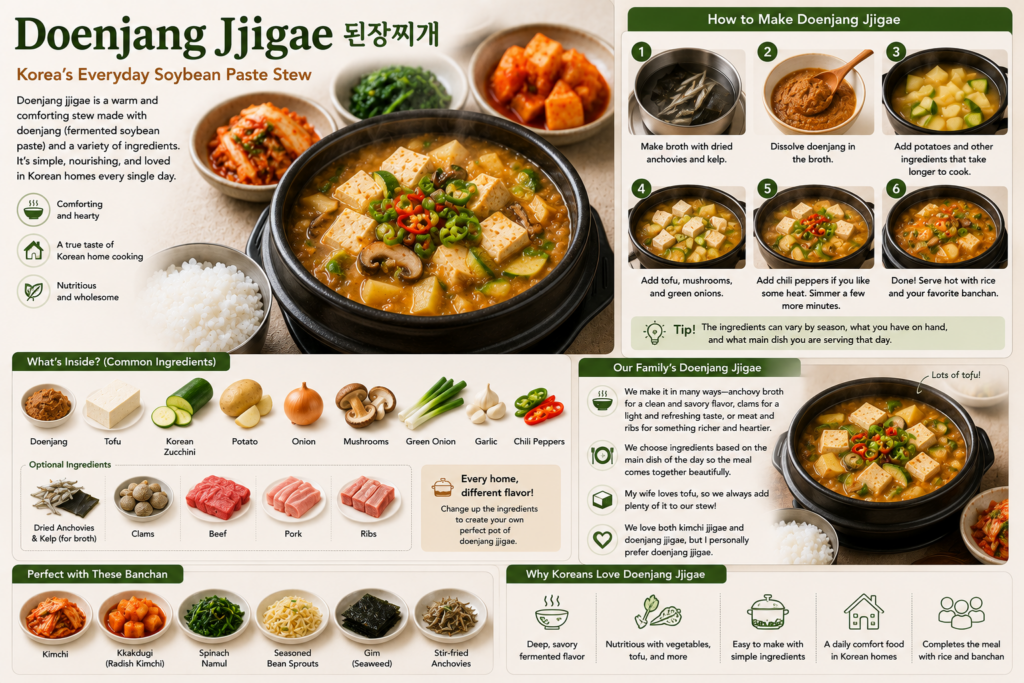
Explore doenjang jjigae through our family’s tofu-filled stew, different broth choices, and simple ways to enjoy Korean soybean paste stew with rice.
Our Doenjang Jjigae Always Has Plenty of Tofu
We eat doenjang jjigae regularly at home. The ingredients sometimes change depending on what else we are serving, but there is always plenty of tofu because my wife likes it.
We often add shiitake mushrooms and Korean zucchini or regular zucchini. Our version has plenty of solid ingredients and just enough broth around them. We tend to enjoy generous spoonfuls of tofu and vegetables with rice.
I eat kimchi jjigae too, but personally, I prefer doenjang jjigae. Its deep, savory soybean flavor goes especially well with warm rice. I also like how the taste changes when we use anchovies for the broth, add clams, or include meat or ribs—even when we use the same doenjang.
At home, doenjang jjigae is not a dish we make from one fixed recipe. It is a familiar stew that changes a little with the ingredients available and the rest of the meal.
Doenjang Brings the Tofu and Vegetables Together
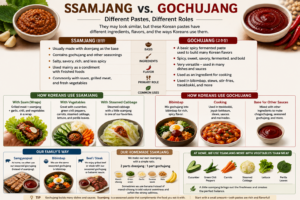
Doenjang jjigae is made by dissolving doenjang in water or broth and simmering it with tofu, vegetables, and other ingredients. Doenjang is a fermented soybean paste that contributes a distinctive aroma and savory depth as well as saltiness.
That fermented aroma may be unfamiliar at first. Rather than judging it on its own, try the stew with tofu, vegetables, and rice to understand how the paste works within the meal. Our guide to doenjang covers the ingredient and its other uses in more detail.
| Common ingredient | What it contributes |
|---|---|
| Doenjang | The base seasoning, fermented aroma, and savory flavor. |
| Tofu | A soft texture that pairs well with the broth. |
| Korean zucchini and onion | Vegetable flavor and gentle sweetness. |
| Potato | A tender, starchy texture. |
| Mushrooms | Different aromas and textures depending on the variety. |
| Green onion and garlic | Additional aroma. |
| Chili peppers | Heat that varies with the type and amount used. |
You do not need to include every ingredient each time. Vegetables already in the refrigerator can go into the pot, and different broths and additions can change the finished stew considerably.
Anchovies, Clams, and Meat Give the Broth Different Flavors
At home, we sometimes make the broth with dried anchovies and sometimes add clams. Meat or ribs give us another version. The savory flavor of anchovy broth, the seafood taste of clams, and the richness of meat each make a different impression.
We also consider how the stew will work with the other side dishes or the main dish. Calling it doenjang jjigae does not mean we use the same broth and ingredients every time.
There is no fixed rule that a particular main dish must be paired with a particular broth. We make that choice according to the meal rather than following one set combination.
When changing to a different doenjang, you may need to adjust how much you use. Saltiness and aroma vary, so start with a little and taste before adding more. The seasoning can also become more concentrated as the liquid reduces during cooking.
Rice Balances the Stew’s Savory Flavor
Doenjang jjigae is usually eaten with rice. Instead of drinking only the broth, you can eat some tofu and vegetables, take a spoonful of rice, and have a little broth alongside them.
For a first taste, try a piece of tofu with rice. The soft tofu and plain rice balance the salty flavor of the doenjang. Use whichever utensil makes the ingredients easy to pick up. A spoon works well for tofu that might break apart, while chopsticks can be convenient for other pieces.
If you are sharing a pot, use the serving ladle and individual bowls provided. If the stew comes in a small earthenware pot for one person, enjoy it with your own rice. A freshly served ttukbaegi and its contents can be very hot, so take your time.
A pot of stew, rice, and a few prepared banchan make a familiar home meal. Our article on what Koreans really eat at home describes our meals in more detail.
At Restaurants, Ask About Chili Peppers and the Broth
We add a little Cheongyang chili pepper or jalapeño at home. We do not use much, but it adds a touch of heat to the savory soybean flavor.
Although doenjang provides the main flavor, the stew is not always mild. Hot green chili peppers or gochugaru can make it spicier than you might expect. The brown color of the broth does not tell you how much heat it contains.
If spicy food is difficult for you, ask whether hot peppers are included and whether the kitchen can adjust them before cooking.
For a vegetarian or vegan meal, check the broth as well as the visible ingredients. A pot that appears to contain only tofu and vegetables may still use anchovy broth. Other versions include clams or meat.
At Korean BBQ restaurants, people may add doenjang jjigae and rice toward the end of a meal. Whether the stew is included or ordered separately depends on the restaurant. For the broader experience of cooking meat at the table, see our guide to eating Korean BBQ for the first time.
How Does It Differ From Doenjang Guk or Kimchi Jjigae?
Doenjang guk also uses soybean paste, but generally has more broth and lighter seasoning than doenjang jjigae. With jjigae, there is often more emphasis on eating substantial pieces of tofu and vegetables with the broth and rice. The boundary is not always clear, since households prepare them differently. Our comparison of guk, tang, and jjigae explores these categories separately.
Kimchi jjigae centers on the tanginess and seasoning of fermented kimchi, while doenjang jjigae is built around the savory fermented flavor of soybean paste. Both go with rice, but they offer different tastes. The choice can depend on personal preference and what sounds good that day.
I prefer doenjang jjigae, and we add plenty of the tofu my wife enjoys. The broth and other ingredients may change, but those preferences remain part of our pot of stew.
If you are trying doenjang jjigae for the first time, taste it with tofu, vegetables, and rice rather than judging it by the broth alone. Another time, compare an anchovy-broth version with one containing clams or meat. You may find a particular combination you enjoy within this familiar Korean dish.