Gimbap: Korea’s Everyday Rice Roll Explained
Discover gimbap through our favorite fillings, homemade rolls, and egg-coated leftovers, with tips for choosing and enjoying this Korean rice roll.
I Like Tuna Gimbap, While My Wife Prefers Vegetable Gimbap
Even when we visit the same gimbap shop, my wife and I choose different rolls. I like tuna gimbap, while she prefers vegetable gimbap. The basic structure of rice wrapped in seaweed is the same, but the fillings change the flavor and texture.
We also make gimbap often at home. A finished roll looks like a simple meal, but preparing the fillings individually takes more work than it might suggest. Once everything is ready, though, we can make several rolls to share and adjust the amounts of the ingredients we like.
One of gimbap’s pleasures is having rice and several fillings together in each piece. It can be a homemade meal or a roll bought from a shop on a busy day.
The Fillings Create the Flavor of Each Bite
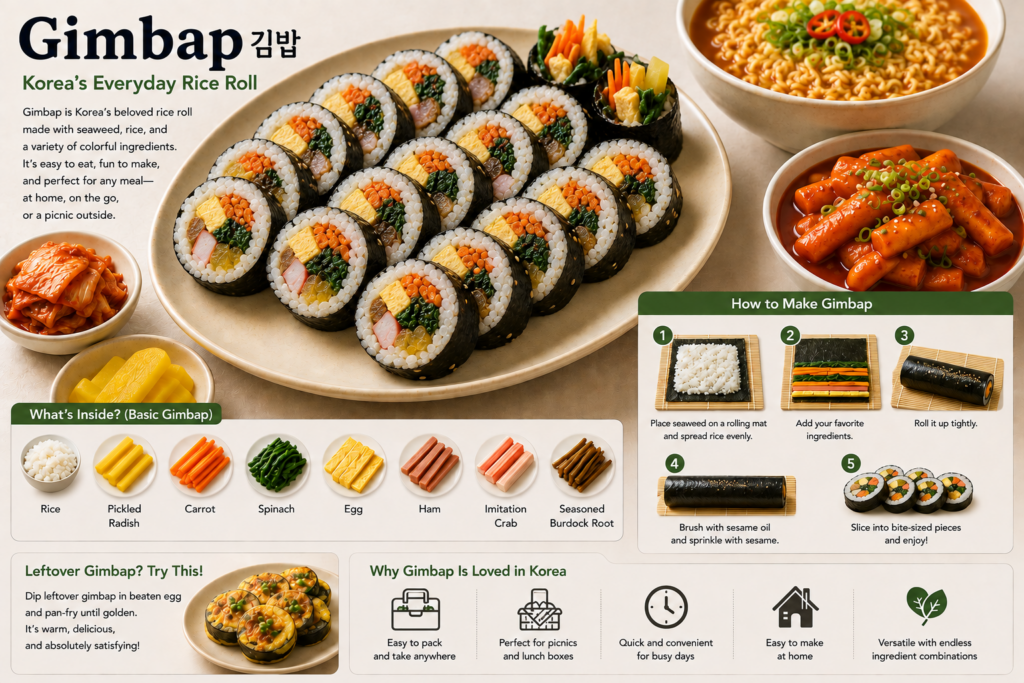
The name gimbap comes from gim, meaning seaweed, and bap, meaning rice. A thin layer of rice is spread over a sheet of seaweed, fillings are arranged lengthwise, and the whole thing is rolled and sliced. You may see it spelled either gimbap or kimbap in English; both refer to the same food.
There is no fixed ingredient list for every roll. Even basic gimbap varies between shops and households.
| Ingredient | Flavor and texture it adds |
|---|---|
| Seaweed and rice | The base that holds the fillings together in each piece. |
| Danmuji, yellow pickled radish | Sweetness, tanginess, and crunch. |
| Carrot and spinach | Vegetable flavors and contrasting textures. |
| Egg | A soft texture. |
| Seasoned burdock root | A sweet and savory flavor with a pleasantly firm bite. |
| Ham, fish cake, or imitation crab | Different savory flavors depending on the filling. |
The rice is usually lightly seasoned with salt and sesame oil. A little sesame oil may also be brushed over the finished roll. Since the fillings are often seasoned too, the important thing is how everything tastes together. Our guide to Korean sesame oil explains its role in more detail.
The crunch of pickled radish, softness of egg, and firmer texture of burdock can all appear in one bite. The colorful cross section is attractive, but it also shows the variety of ingredients you are about to taste.
When Comparing Gimbap With Sushi, Start With the Rice
Rice and fillings wrapped in seaweed may remind you of a sushi roll. One of the easiest differences to notice when tasting them is the seasoning of the rice.
Sushi generally uses rice seasoned with vinegar. Gimbap rice is usually seasoned with salt and sesame oil and combined with cooked or seasoned fillings. The sesame aroma and the seasoning of those fillings create a different flavor.
Some sushi also contains cooked ingredients or vegetables, so the distinction is not simply whether raw fish is present. When trying gimbap, look beyond the similar shape and notice the aroma of the rice and the combination of fillings.
Choose a Roll Based on the Fillings You Enjoy
Gimbap shops may offer tuna, vegetable, cheese, bulgogi, pork cutlet, and other varieties. Rolls with the same name can still differ in size and ingredients from one shop to another.
Tuna gimbap often includes mayonnaise. Pork cutlet gimbap adds the texture of fried meat, while rolls containing spicy meat or chili peppers may have more heat than basic gimbap. Choose according to the ingredients and flavors you enjoy.
Just as I choose tuna and my wife chooses vegetable gimbap, two people visiting the same shop can find different rolls that suit them.
If you want a vegetarian or vegan meal, check the ingredients rather than relying on the name “vegetable gimbap.” It may still contain egg, ham, fish cake, or imitation crab.
There are also versions with a different structure, such as Chungmu gimbap. Instead of several fillings rolled inside, small rice-and-seaweed rolls come with separate accompaniments such as seasoned squid or fish cake and radish kimchi. Eating the rolls with those sides is part of the experience.
Eat Gimbap on Its Own or Alongside Ramyeon and Tteokbokki
At home, we sometimes eat gimbap on its own and sometimes alongside other foods. We do not always serve it the same way.
Since the rice and fillings are usually seasoned, gimbap is generally eaten as it is, without dipping it in soy sauce. If a slice is a comfortable size, try it in one bite so that you can taste the rice and fillings together. There is no need to force a large piece into your mouth, though.
At gimbap shops and bunsik restaurants, people may order ramyeon or tteokbokki alongside their rolls. A spoonful of warm ramyeon broth offers a change in flavor and temperature between pieces of gimbap. Some people also dip gimbap lightly into tteokbokki sauce. That is an optional way to enjoy it, not a rule you need to follow.
Gimbap can be a meal by itself or part of a larger selection of casual dishes. For more about tteokbokki and how it is eaten, see our guide to Korean spicy rice cakes.
A Simple-Looking Homemade Roll Takes Some Preparation
We mainly use ingredients we already have at home. These include egg, pickled radish, imitation crab, cucumber, spinach, carrot, ham or bulgogi, and fish cake. We do not prepare exactly the same selection every time.
There is a combination we always include, however. Egg and pickled radish always go in, along with either cucumber or spinach and either ham or bulgogi. The other fillings depend on what we have that day. This is our familiar household combination, rather than a fixed recipe that everyone should follow.
The rolling process is fairly straightforward: spread rice over seaweed, arrange the fillings, roll firmly, and slice. Before that, though, there are vegetables to prepare, eggs to cook, and fillings to season.
Although we make gimbap often, the finished roll does not show all that preparation. Too much rice can make rolling difficult, and too many fillings can split the seaweed. Getting the amounts right takes some practice.
At home, we can choose the ingredients we like. At a shop, we can select different varieties without preparing each one ourselves. Both are familiar ways to enjoy gimbap.
We also have lunches where one dish, such as gimbap, is enough. Not every meal needs rice, soup, and several separate side dishes. Our article on what Koreans really eat at home describes how our meals vary.
We Sometimes Coat Refrigerated Gimbap in Egg and Warm It in a Pan
At home, we sometimes dip leftover refrigerated gimbap in beaten egg and cook the pieces in a pan. We use a little oil and cook them on both sides.
The rice, which has become firm in the refrigerator, warms up again, and a thin layer of cooked egg coats the outside. It tastes and feels different from freshly made gimbap, and I enjoy this version too.
We do this with gimbap that has been properly refrigerated. It should not be treated as a way to make gimbap safe after it has been left out too long.
Gimbap is also a familiar picnic food in Korea. Sliced and packed in a lunchbox, it brings rice and several ingredients together conveniently. When taking it outdoors, keeping it chilled matters too.
For me, gimbap offers the pleasure of choosing a favorite tuna roll or sharing a homemade meal. Coating refrigerated pieces in egg gives us another texture to enjoy. If you are trying it for the first time, taste the combination in a basic roll, then explore versions with the fillings you like.