
Salmon Sotbap: How We Turn Salmon Tail Pieces into a Pot of Rice
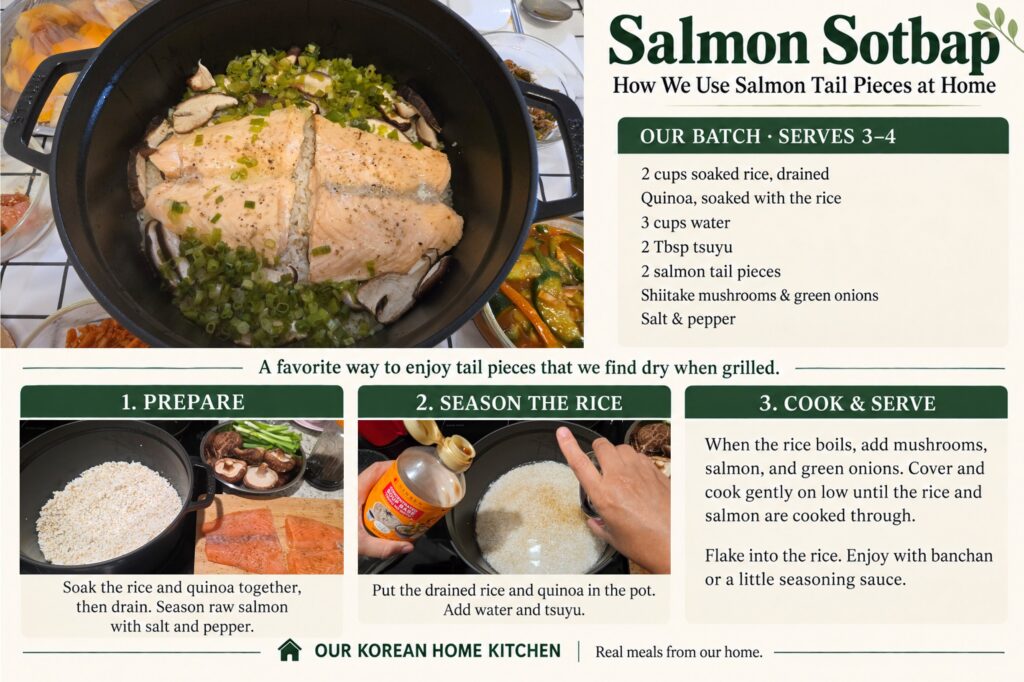
See how we make salmon sotbap at home with salmon tail pieces, rice, quinoa, shiitake mushrooms, and tsuyu, served with our everyday side dishes.
A Pot of Rice Made with Two Salmon Tail Pieces
We enjoy salmon sashimi at home, so we buy salmon fairly often. When we purchase Norwegian salmon at Costco, we use different parts for different meals. We choose the fattier portions when preparing sashimi and set aside the tail pieces for salmon sotbap (연어솥밥), rice cooked in a pot with salmon and other ingredients.
To me, salmon tail can taste a little dry when grilled, especially compared with the fattier portions. Cooking it over rice gives us another way to enjoy it. Since we often eat salmon, this rice dish has become a familiar part of our home meals.
For us, salmon sotbap is a practical way to turn the remaining tail pieces into a full meal. We combine rice and quinoa with shiitake mushrooms, salmon, and plenty of green onions in one pot.
Preparing the Rice, Quinoa, Salmon, and Vegetables
This batch serves three to four people. We used two salmon tail pieces, with plenty of shiitake mushrooms and chopped green onions around the salmon. We soak the quinoa together with the rice, then drain them together before cooking.
| Ingredient | Amount or Preparation for This Batch |
|---|---|
| Soaked rice | 2 cups, drained |
| Quinoa | Soaked with the rice, then drained together |
| Water | 3 cups |
| Tsuyu | 2 tablespoons |
| Salmon tail pieces | 2 pieces, seasoned beforehand with salt and pepper |
| Shiitake mushrooms | Sliced |
| Green onions | Generously added, thinly sliced |
These amounts reflect the batch we made at home. The water and cooking time may need adjustment depending on how much water the grains absorb during soaking, the amount of quinoa, and the pot used.
We start with uncooked salmon rather than searing it separately. We season it with salt and pepper beforehand and slice the mushrooms and green onions so everything is ready when the rice begins to boil.
Adding Tsuyu to the Rice Water
After soaking the rice and quinoa together, we drain them and place them in the pot. For this batch, we use two cups of soaked rice along with the quinoa, then pour in three cups of water and add two tablespoons of tsuyu.
Tsuyu is a Japanese soup base and seasoning that adds savory flavor to the rice. For this dish, we add it to the cooking water so it cooks with the grains. Concentration and saltiness vary by product, so the amount may need adjusting if you use a different tsuyu.
This seasons the rice before it reaches the table. We can then eat it with a separate sauce or simply enjoy it alongside our usual side dishes.
Adding the Mushrooms and Salmon When the Rice Begins to Boil
When the rice begins to boil, we arrange the sliced shiitake mushrooms on top. Next come the two salmon pieces, already seasoned with salt and pepper. We leave them intact rather than cutting them into small pieces or cooking them in a separate pan.
We then scatter plenty of sliced green onions over the top. With mushrooms and green onions filling the spaces around the salmon, the pot starts to look like a complete meal.
We cover the pot and turn the heat down to low. In our batch, we cooked it gently for about another five minutes, allowing the ingredients to steam under the lid. However, five minutes is not a universal finishing time for every pot or thickness of salmon. Check that the rice is cooked and the salmon is cooked through at the center, and continue cooking as needed.
Flaking the Salmon into the Rice
We bring the finished pot to the table with the two salmon pieces still resting on top of the rice. Surrounded by mushrooms and green onions, it feels different from serving grilled salmon on a separate plate.
As we eat, we flake off pieces of salmon and enjoy them with the rice. One spoonful might include salmon and rice, while the next has a little more mushroom or green onion.
Sometimes we serve a separate seasoning sauce, and sometimes we eat the sotbap with side dishes alone. Since the rice already contains tsuyu, it helps to taste it before adding more sauce. How much we want also depends on the seasoning of the side dishes.
If banchan is new to you, our guide to eating Korean side dishes with rice explains how to try different combinations throughout a meal.
The tail pieces that I find less enjoyable grilled work much better for me this way. Changing how we cook and serve them makes a difference.
Using Different Parts of the Same Salmon
Buying salmon does not mean we have to prepare every part in the same way. In our kitchen, using the fattier portions and the tail pieces differently is how salmon sotbap became a regular meal.
It is not something we save only for special occasions. With salmon tail pieces, rice, mushrooms, and green onions, we can make a pot of rice and serve it with the side dishes we already have. This is one example of the everyday cooking we share in Our Korean Home Kitchen.
Turning tail pieces that can taste dry when grilled into salmon we enjoy with rice—that is what keeps us making this dish at home.
Comments 0
Be the first to leave a comment.